OBITUARY: Pete Edochie: War-tested broadcaster who became Nollywood legend

Pete Edochie: War-tested broadcaster who became Nollywood legend. Before becoming Nollywood’s defining patriarch, Pete Edochie spent three decades in broadcasting, worked for the Voice of Biafra, and gave Okonkwo an unforgettable screen life.
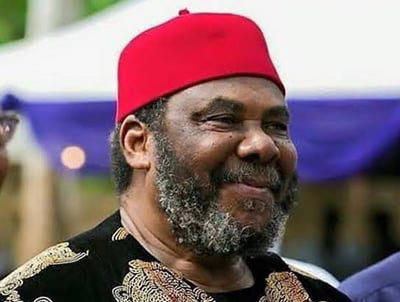
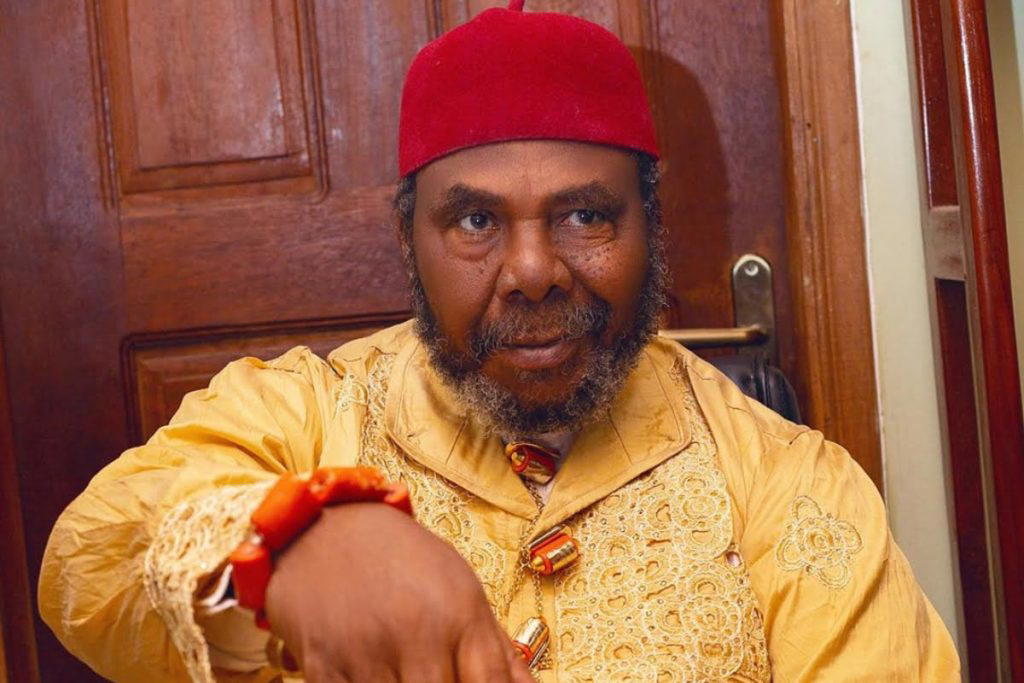
For many years, one name commanded presence in Nollywood, fittingly cast as kings, traditional rulers and powerful patriarchs, often adorned with a crown and armed with an endless supply of proverbs: Chief Pete Edochie.
Edochie became the screen embodiment of authority, wisdom, and traditional African masculinity. His deep, thunderous voice, deliberate delivery, and imposing presence made him impossible to ignore, earning him the enduring sobriquet Ebubedike.
But beyond the crown, the proverbs and the commanding screen persona, he was a man whose career stretched far beyond Nollywood. A broadcaster who worked for the Voice of Biafra during the Nigerian Civil War, Mr Edochie spent more than three decades in broadcasting before his portrayal of Okonkwo in the 1987 television adaptation of Chinua Achebe’s Things Fall Apart transformed him into a household name.
Mr Edochie died at 12:30 a.m. on Wednesday, 25 November, in Enugu, aged 79, after a prolonged battle with prostate cancer, his family announced.
His son, Leo Pete Edochie, announced the death in a statement shared on Instagram on behalf of the family, titled ‘An Iroko Has Fallen’.
Like he said during his tribute to his younger colleague, Alex Ekubo, borrowing from William Shakespeare’s famous line: “All the world is a stage, and all men and women are mere players; they have their exits, and they have their entrances.” The phenomenal actor and Nollywood powerhouse has exited the stage.
Unfortunately, the veteran who revealed that the Late Alex Ekubo had big plans for his 80th birthday, a celebration that is still underway, only died at age 79.
Born on 7 March 1947, Edochie grew up in northern Nigeria, particularly Zaria, Kaduna State, where his father worked with the Nigerian Railway Corporation.
The veteran hailed from Akamnato, Ifite Nteje in Anambra State. Accounts of his birthplace differ. Although several biographies identify Zaria, Edochie himself maintained that he was born in Enugu because his mother travelled there to deliver him while his father was stationed in Makurdi. She subsequently returned north with him.
The railway worker’s household moved through several northern towns, including Makurdi, Kano and Zaria, exposing the young Edochie to different communities and cultures in northern Nigeria; little wonder he is fluent in Hausa.
He attended St Patrick’s and St James Primary Schools in Zaria before proceeding to St John’s College, Kaduna, where he developed an interest in literature and dramatic performance.
His interest in acting began while he was still in secondary school. In 1962, he participated in a school production of William Shakespeare’s ‘The Merchant of Venice’, an early experience that introduced him to the stage. He subsequently performed in other Shakespearean productions, including ‘Julius Caesar’ and ‘Macbeth’.
After leaving secondary school in 1964, Edochie followed his father into the Nigerian Railway Corporation, working in its accounts department before eventually pursuing broadcasting.
He later studied at the School of Journalism and Television in England and trained at the BBC.
Edochie’s entry into broadcasting was almost accidental. In February 1967, at the young age of 20, he joined the Eastern Nigeria Broadcasting Corporation as a junior programmes assistant after discovering that the invitation letter for his employment interview had arrived after the scheduled date.
Rather than abandon the opportunity, he approached the station and pleaded for another chance. His persistence paid off; little did he know that it was only the beginning of a broadcasting career that would span more than three decades.
One person he met at the station was Josephine Obiekwe, a fellow broadcaster who would later become his wife.
Their professional relationship unfolded against one of the most turbulent periods in Nigeria’s history. Following the outbreak of the Nigerian Civil War in July 1967, Edochie and Josephine worked with the Voice of Biafra, the broadcasting service of the secessionist Republic of Biafra.
The work was demanding and, at times, dangerous. Mr Edochie recalled that broadcasts sometimes continued until the early hours of the morning, after which he had to walk home in the dark.
After the war, he returned to broadcasting in Enugu, working through the region’s broadcasting service as it underwent various institutional transformations. In 1980, he received professional training at the British Broadcasting Corporation (BBC), an experience that further strengthened his broadcasting credentials.
Seven years later, he became the pioneer director of ABS 3 FM Stereo in Enugu, which he named ‘Sunrise ’96’.
The name reportedly attracted objections from military authorities who were suspicious of its possible political symbolism and association with the eastern region. Edochie, however, defended the name, arguing that the sun rises in the east. Hence the station retained the name.
He subsequently rose through the broadcasting establishment, serving as Director of Programmes and, at different times, in acting management positions. He also hosted ‘Music for the Masters’, a classical music programme that developed a following among listeners.
By the time he left broadcasting, Edochie had spent about 31 years in the profession, establishing himself as an experienced broadcaster and administrator long before his acting fame.
Edochie’s transition from broadcasting to acting was defined by one character: Okonkwo.
In 1987, he was cast as the central character in the Nigerian Television Authority’s adaptation of Chinua Achebe’s 1958 novel, ‘Things Fall Apart’.
The production brought to television one of African literature’s most recognisable characters: a celebrated wrestler and respected warrior in Umuofia whose fear of appearing weak, rigid attachment to tradition, and inability to adapt to change ultimately contribute to his tragic downfall.
Interestingly, Edochie had not read Achebe’s novel before receiving the script. He encountered the story through the television production and auditioned for the role after a former colleague, G.C. Ugwu (now late), recommended him. His audition at the University of Nigeria’s Enugu campus impressed the production team so much that the search for an actor to play Okonkwo ended after his reading.
Edochie gave Okonkwo a commanding physical presence and an imposing voice that reflected the character’s reputation as a formidable warrior. Yet beneath his apparent strength was a deeply troubled man, whose fear of failure and weakness made him increasingly vulnerable to his society’s changing circumstances.
The television adaptation introduced Edochie to a much wider audience, while his interpretation of the character attracted international attention. The BBC subsequently travelled to Nigeria to interview him about the role.
Edochie later recalled that Achebe was pleased with his interpretation and called him ‘Ebubedike’, an Igbo expression commonly translated as a mighty man. The name stayed closely associated with the actor throughout his lifetime.
For many Nigerians, the distinction between Edochie and Okonkwo became difficult to separate. His performance was so influential that it established a screen identity he carried throughout his career.
Although ‘Things Fall Apart’ established his acting credentials, Edochie’s subsequent transition into Nigerian home-video productions secured his place in the country’s emerging film industry.
One of his early film appearances was in ‘Ikuku (Hurricane)’, a production associated with actor and filmmaker Nkem Owoh. Edochie recalled receiving ₦50,000 for the role, compared with his monthly broadcasting salary of about ₦9,000 at the time.
He subsequently featured in numerous productions as Nollywood expanded during the 1990s and early 2000s.
Among his notable films were ‘Rituals’(1997), ‘Igodo’ (1999), and ‘Billionaire’s Club’(2003). His later appearances included Genevieve Nnaji’s ‘Lionheart’ (2018), in which he played Chief Ernest Obiagu, and ‘King Mabutu’ (2023). Across these productions, Mr Edochie developed a recognisable screen identity.
He frequently portrayed traditional rulers, wealthy businesspeople, community leaders, and fathers whose authority was rarely questioned. His characters often spoke in measured sentences, punctuated by proverbs and philosophical observations about life, power, family and human conduct.
His contributions earned him several recognitions, including the national honour of Member of the Order of the Niger (MON), conferred in 2003 by former President Olusegun Obasanjo.
He also received the Africa Magic Viewers’ Choice Awards Industry Merit Award in 2014 and a Lifetime Achievement Award from the Africa Film Academy. In 2020, he received the African Film Legend Award at the African Film Festival.
Away from the screen, the veteran maintained a relatively private family life, despite his celebrity status.
He married Josephine in 1969. She was also a broadcaster when they met at the Eastern Nigeria Broadcasting Corporation but later became a lawyer.
Their marriage lasted 57 years and produced six children. In an interview in 2014, Mr Edochie disclosed that he had fathered six children but lost one of them; he identified the surviving ones as Leo, Adam, Linc, Gene, and Yul, alongside a daughter, Eva. Two of his sons, Linc and Yul, followed him into Nollywood.
Edochie occasionally spoke about the importance of discipline, family responsibility, and faith. A practising Catholic, he was known for his devotion to prayer and the Rosary. However, he greatly respected African traditions, especially Igbo culture.
He also experienced personal tragedies. He spoke about the death of a young son, Carl, as one of the saddest experiences of his life. The death of his 16-year-old grandson, Kambilichukwu, in 2023 was another devastating loss for the family.
In August 2009, he was kidnapped and later released unharmed, an experience that briefly interrupted the otherwise carefully managed public life of the actor.
He also became the subject of repeated death rumours on social media. In February 2026, he said he had been falsely declared dead seven times.
In the final months of his life, Edochie’s health became a subject of public concern. During a visit to Ghanaian actor Emmanuel Armah in Accra in September 2026, a video of the encounter circulated online, showing the veteran actor speaking about his physical difficulties.
He said walking had become difficult and that parts of his body sometimes swelled.
Despite his condition, Edochie spoke about his faith and acceptance of mortality. He reportedly said: “I just keep asking God, you are the author of life. Whenever you feel it is time for me to go, take me. Don’t let me bother the people who are around me.”
Less than two months later, the actor died in Enugu, the city he had identified as his birthplace.
After surviving numerous false death hoaxes on social media over the years, Pete Edochie passed away on Wednesday at the age of 79 in Enugu, Nigeria, following a prolonged battle with prostate cancer.
Announcing the death, the veteran’s son Leo wrote on behalf of the family, “With profound sadness and hearts bowed in total submission to the will of Almighty God, we announce the passing of our beloved husband, father, brother and kinsman, Chief Dr Pete EDOCHIE, MON (Ononenyi), a retired broadcaster and veteran Actor,” the statement read.
The family said the actor hailed from Akamnato, Ifite Nteje, in Anambra State, and is survived by his wife, Barrister Josephine Edochie, six children, siblings and other relatives. It said funeral arrangements would be announced later.
- pete
- edochie
- nollywood
- obituary
- broadcaster
- legend
- war
- patriarch