business

2027 Budget borrowing will push up rates and starve businesses – Prof Isaac Boadi warns
2027 Budget borrowing will push up rates and starve businesses – Prof Isaac Boadi warns

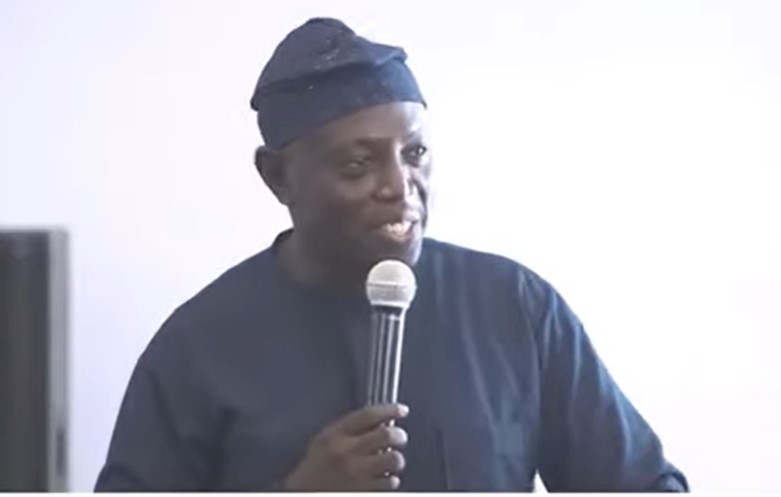
By Myjoyonline.com The 2027 budget will make government the biggest obstacle to cheaper credit for Ghanaian businesses, the President of Africa Policy Lens (APL), Prof. Isaac Boadi, has warned. In a critique of the Budget, Prof. Boadi says the financing plan behind the government’s New Economy programme works directly against its own promise to deliver cheaper loans to farmers, manufacturers and exporters.

By Myjoyonline.com The 2027 budget will make government the biggest obstacle to cheaper credit for Ghanaian businesses, the President of Africa Policy Lens (APL), Prof. Isaac Boadi, has warned. In a critique of the Budget, Prof. Boadi says the financing plan behind the government’s New Economy programme works directly against its own promise to deliver cheaper loans to farmers, manufacturers and exporters.

“The state is now business’ biggest rival for credit,” he said. GH¢85 billion vs GH¢135.7 billion The numbers at the heart of his warning are stark. Total bank credit to the private sector stood at GH¢135.7 billion at the end of October 2026. But the 2027 Budget plans GH¢85.0 billion in net domestic borrowing. That is equal to about 63 percent of the entire stock of credit currently available to private businesses.

“When the state borrows that much from the same banks and savers, it pushes up interest rates and takes loanable funds away from businesses,” Prof. Boadi said. Borrowing to help business, by hurting business The New Economy programme is budgeted at GH¢30 billion in its first year. Prof. Boadi says about GH¢18 billion of that amount comes not from new revenue, but from cutting the primary surplus, which means more government borrowing.

“By borrowing to protect enterprise, the government risks crowding out the businesses it means to support,” he warned. He explained the dilemma facing banks in simple terms: when a government bond pays around 15 per cent with no default risk, lending to a small farmer or manufacturer becomes the harder choice. “Cheaper credit cannot reach businesses while government is the biggest borrower in the same market,” he said.

Three demands to Government: Prof. Boadi and APL are calling on the government to change course before the damage is done: 1. Keep the primary surplus at 1.5 per cent of GDP until public debt falls below the 45 per cent anchor. 2. Fund the New Economy only from verified new revenue, not from more domestic borrowing. 3. Publish a quarterly report comparing government domestic borrowing with private-sector credit growth, so Ghanaians can see whether the state is crowding in business or crowding it out.

Prof. Boadi said the government must choose between being a partner to business by borrowing less and leaving room for banks to lend to the real economy, or be a rival by borrowing GH¢85 billion from the same pool businesses depend on. “You cannot promise businesses cheaper credit while competing with them for the same money,” he said. Below is the full critique.

  • boadi
  • business
  • borrowing
  • government
  • budget
  • credit
  • isaac
  • economy

Summaries and tags are generated automatically. Stay informed with VidiaNews.

Related news

‘What has changed in the pockets of Ghanaians?’ – Afenyo-Markin challenges government
business

‘What has changed in the pockets of Ghanaians?’ – Afenyo-Markin challenges government

Minority Leader Alexander Afenyo-Markin has questioned the impact of the government’s reported economic gains on ordinary Ghanaians, arguing that official statistics do not reflect the financial realities facing households and businesses. Contributing to the closing debate on the 2027 Budget Statement in Parliament on Thursday, November 26, 2026, Afenyo-Markin said the two economies were increasingly disconnected.

Read →
‘This is the people’s budget’ – Agalga defends 2027 budget, rules out new taxes
business

‘This is the people’s budget’ – Agalga defends 2027 budget, rules out new taxes

Majority Leader James Agalga has defended the 2027 Budget as a “people’s budget”, saying it delivers on the government’s promises to reduce inflation, borrowing and excessive public spending without introducing new taxes. Contributing to the closing debate on the 2027 Budget Statement in Parliament on Thursday, November 26, 2026, Agalga said the government would also fund major infrastructure projects without resorting to additional borrowing.

Read →
2027 Budget is a budget of restraint with purpose – Majority Leader
business

2027 Budget is a budget of restraint with purpose – Majority Leader

Majority Leader, James Agalga, has described the 2027 Budget as a “budget of restraint with purpose”, saying it offers Ghana an opportunity to pursue development without placing additional debt burdens on future generations. Speaking during the debate on the 2027 Budget Statement in Parliament on Thursday, November 26, Mr Agalga said the budget rejects the notion that development must come at the cost of increased borrowing.

Read →
New Economy will depend on financing and implementation of 8 pillars – KPMG
business

New Economy will depend on financing and implementation of 8 pillars – KPMG

Professional services firm KPMG has stated that Ghana’s New Economy’s ambitions for stronger production, exports and jobs will depend on how its eight pillars are financed and implemented. At the same time, it called for one cross-government delivery team to resolve dependencies and align the New Economy with Big Push, Feed Ghana and the 24-Hour Economy.

Read →
Ghana’s 2027 budget: A New economic direction and what it means for the energy sector
business

Ghana’s 2027 budget: A New economic direction and what it means for the energy sector

Ghana’s 2027 Budget Statement, presented by Finance Minister Dr Cassiel Ato Forson under the theme “The New Economy: New Ghana, Jobs and Prosperity,” represents an important shift in the country’s economic policy direction. A New Opportunity for Energy Security and Industrial Competitiveness The Budget acknowledges the structural challenges confronting Ghana’s electricity sector, including high tariffs, distribution losses, weak revenue collection, fuel supply risks and accumulated financial obligations.

Read →
German investors want predictable tax and regulatory environment in Ghana – Dr Blank
business

German investors want predictable tax and regulatory environment in Ghana – Dr Blank

The Delegate of German Industry and Commerce in Ghana, Dr Michael Blank, has urged the government to reduce regulatory and tax-related uncertainties to make the country more attractive to German investors. Speaking to JoyNews on the sidelines of the German-African Business Summit (GABS) 2026 in Accra, Dr Blank identified uncertainty as one of the major obstacles facing businesses globally.

Read →