New party proposes death penalty for corruption if elected
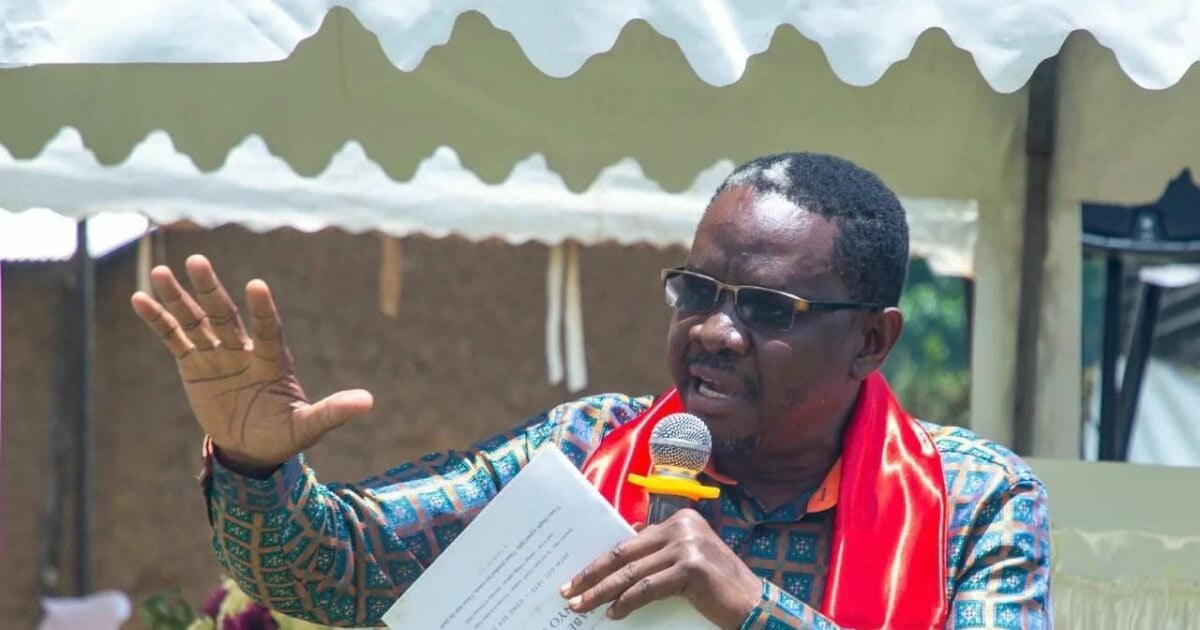
NAIROBI, Kenya, Nov 26 – The Freedom and Opportunity Party (FOP) has proposed reintroducing hanging as punishment for corruption, with its presidential candidate Onyango Oloo declaring that officials convicted of stealing public resources would face the death penalty if the party forms the next government. Oloo also cited Singapore and China as countries whose development experiences Kenya should examine, arguing that the country could not achieve comparable economic progress without taking decisive action against corruption.
NAIROBI, Kenya, Nov 26 – The Freedom and Opportunity Party (FOP) has proposed reintroducing hanging as punishment for corruption, with its presidential candidate Onyango Oloo declaring that officials convicted of stealing public resources would face the death penalty if the party forms the next government.
Oloo said Kenya needed radical measures to tackle corruption, which he blamed for undermining economic development and depriving the country of resources needed to finance essential public services.
Speaking at a funeral gathering in Siaya, the former Secretary-General of the defunct The National Alliance (TNA) said existing approaches had failed to contain corruption, arguing that tougher punishment was necessary to deter public officials from stealing public funds.
“The thing that has hindered the growth of Kenya the most is corruption. And we say, if you give us that opportunity, we shall introduce hanging for those who are corrupt,” Oloo said.
He challenged Kenyans to decide whether they wanted the country to continue losing billions of shillings through corruption or support what he described as more radical interventions to eliminate the vice.
“It is for Kenyans to decide: do they continue having corruption, or do they get rid of it? If you want to finish it, you must be radical to eliminate corruption in our country,” he said.
However, implementing the proposal would require significant changes to Kenya’s existing legal framework and raise constitutional and human rights questions.
Although the death penalty remains in Kenya’s laws for certain offences, it has not been carried out since 1987.
The Constitution also protects the right to life, making any proposal to extend capital punishment to corruption a major legal and constitutional undertaking.
Beyond the proposed death penalty, FOP is also advocating financial incentives for whistleblowers who expose corruption, promising to award informants 10 per cent of the money recovered from stolen public resources.
Under the proposed arrangement, individuals whose information leads to the recovery of public funds would receive a share of the recovered amount as an incentive to report corrupt dealings.
Oloo argued that recovering money lost through corruption could help address funding challenges in critical sectors, particularly higher education.
Citing World Bank estimates that Kenya loses approximately Sh330 billion annually to corruption, he said the resources could significantly expand financing for university and college students.
He compared the estimated losses with the Sh50 billion allocated to the Higher Education Loans Board (HELB), arguing that recovered public funds could provide additional support for students pursuing higher education.
Oloo also cited Singapore and China as countries whose development experiences Kenya should examine, arguing that the country could not achieve comparable economic progress without taking decisive action against corruption.
FOP became Kenya’s 102nd registered political party after securing full registration in October.
Bruhan Makong is a Senior News Reporter for Capital FM in Nairobi, covering diplomacy, foreign policy, national security, climate, and human rights across East Africa and the wider region.
- corruption
- party
- death
- penalty
- kenya
- oloo
- country
- resource