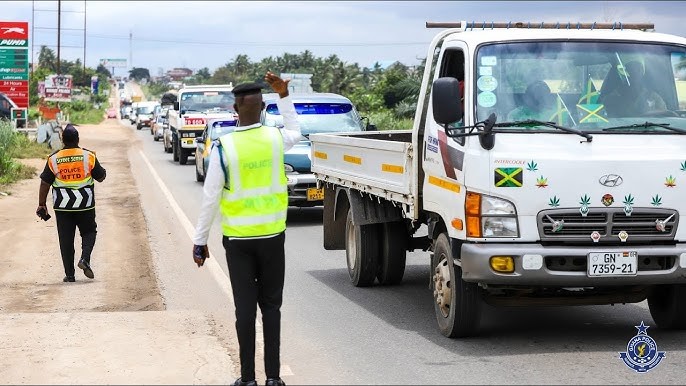
Mallam Junction traffic congestion hotspot cleared after JoyNews extensive report

For residents of Kasoa, Weija, Gbawe, Mallam and adjoining communities, Mallam Junction is more than just an intersection. Daniel Awortwe, Engineer at the Weija-Gbawe Municipal Assembly, and his team, who are carrying out the repair works confirmed that the repair works were executed through collaboration between the Municipal Assembly and the Ministry of Roads and Highways.
After three years of torturous gridlock, missed opportunities and daily frustration, commuters who use the Mallam Junction stretch can finally breathe a sigh of relief. The notorious pothole-ridden section of the highway, which for years turned a short commute into a hours-long ordeal, has been fixed – just days after JoyNews shone a spotlight on the nightmare.
For residents of Kasoa, Weija, Gbawe, Mallam and adjoining communities, Mallam Junction is more than just an intersection. It is the gateway to Accra for thousands travelling from the Central and Western Regions. But that gateway had become a trap. The trouble began three years ago when heavy rains devastated parts of Accra. The road at Mallam Junction was hard hit, leaving behind deep, yawning potholes that forced drivers to crawl, swerve, and sometimes stall completely.
What should have been a smooth drive became a daily pain for commuters. During morning and evening rush hours, the situation was unbearable. Vehicles piled up bumper-to-bumper, engines overheated, tempers flared, and time stood still. On a typical Monday morning, the queue would stretch from Mallam Junction all the way to Broadcasting Junction at New Bortianor in the Ngleshie-Amanfro area.
The human cost was enormous. Workers reported to the office late and queried by bosses. Traders lost valuable market hours. Students missed classes. Patients on their way to hospitals endured painful delays. To outsmart the traffic, many Kasoa residents say they were forced to adopt an extreme routine – leaving home as early as 4:00 a.m. just to beat the Mallam snarl and get to Accra on time.
Those who could not wake that early had to accept being late as part of life. For three years, they pleaded. For three years, nothing changed – until JoyNews told their story. An extensive JoyNews report captured the depth of the suffering, with videos of gridlocked vehicles, interviews with stranded passengers, and drone shots of the deteriorating road.
The report triggered public outrage and finally caught the attention of the authorities. Within days of the broadcast, machinery moved to site. The failed portion has now been patched and levelled, allowing for the free flow of traffic once again. Daniel Awortwe, Engineer at the Weija-Gbawe Municipal Assembly, and his team, who are carrying out the repair works confirmed that the repair works were executed through collaboration between the Municipal Assembly and the Ministry of Roads and Highways.
According to him, the intervention was aimed at restoring the road to motorable condition and easing the unbearable congestion. Today, cars glide through Mallam Junction without the usual jerking and braking. Commercial drivers who once spent hours navigating a few metres now drive through in minutes. Commuters have welcomed the relief, though their joy is mixed with questions.
Gladys Appiah, a regular passenger on the Kasoa-Accra route, could not hide her excitement. She expressed gratitude to the Minister of Roads and Highways, Kwame Agbodza, for acting swiftly after the JoyNews report. But for others like Yaa Serwaa, the celebration feels misplaced. She described the three-year delay as a self-inflicted wound. According to her, fixing potholes on a major international highway is not a capital-intensive project that requires huge loans or complex engineering.
It is basic maintenance that should never have taken three years to fix. Her sentiment reflects a broader frustration among many Ghanaians – why must it take a media report for authorities to act on obvious problems? For now, however, the road is clear. The horns have reduced. The long queues have disappeared. And the 4:00 a.m. exodus from Kasoa may no longer be necessary, but the good news seems not good for hawkers who sell on the pavement during the traffic build-up.
Akua says she makes GHC600.00 a day, but today she has been here for many hours with no sales. Whether this repair will be maintained to prevent another three-year ordeal remains to be seen.
- mallam
- junction
- joynews
- report
- traffic
- hour
- congestion
- kasoa