FG targets $3.2bn beef export market, modernises livestock sector
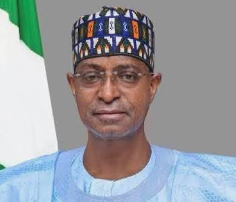
Unveils national traceability plan, targets 1.4m tonnes dairy output By Olasunkanmi Akoni The Federal Government has unveiled plans to transform Nigeria’s livestock sector into a commercially driven industry, targeting a potential $3.2 billion beef export market and an increase in annual domestic milk production to 1.4 million metric tonnes within five years. The Minister of Livestock Development, Dr. Muktar Maina, disclosed this in Lagos while delivering a keynote address at the Second National Council on Livestock Development.
Unveils national traceability plan, targets 1.4m tonnes dairy output By Olasunkanmi Akoni The Federal Government has unveiled plans to transform Nigeria’s livestock sector into a commercially driven industry, targeting a potential $3.2 billion beef export market and an increase in annual domestic milk production to 1.4 million metric tonnes within five years.
The Minister of Livestock Development, Dr. Muktar Maina, disclosed this in Lagos while delivering a keynote address at the Second National Council on Livestock Development. The two-day summit, themed, “From Rebirth to Transformation: Advancing Livestock Development for National Prosperity,” brought together federal and state government officials, researchers and private investors to assess progress and chart a roadmap for the sector.
Maina said the country needed a coordinated transition from fragmented traditional livestock practices to a modern commercial system capable of generating revenue, creating jobs and addressing recurring farmer-herder conflicts. He noted that two years after the establishment of the ministry, the focus must shift from institutional development to measurable economic outcomes.
Reviewing the ministry’s achievements, the minister listed the launch of the National Livestock Growth Acceleration Strategy and the Nigerian Livestock Master Plan, as well as the registration of eight new pasture species, the first in 48 years. On animal health, Maina disclosed that the government was expanding annual vaccine production capacity at the National Veterinary Research Institute, Vom, from 120 million to 850 million doses.
He also announced plans to commission seven Model Veterinary Hospitals, five solar-powered cold-storage facilities and model pastoralist settlements in Yobe and Adamawa states. The minister said 21 states had established dedicated livestock agencies, while 30 states were participating in the World Bank-assisted Livestock Productivity and Resilience Project.
He, however, cautioned against disconnected policies among states, proposing a unified national regulatory framework covering animal identification, traceability, disease reporting and meat certification through a central data platform. According to him, the framework would allow states to adapt implementation to their respective ecological conditions while maintaining common national standards.
Beef export, dairy production Addressing the need to modernise the red-meat value chain, Maina cited Lagos as an example of the infrastructure challenges confronting the sector, noting that more than 90 per cent of the 2.9 million cattle consumed annually in the state were processed at the Oko-Oba open slaughter slabs. He said the ministry had identified accessible international red-meat markets worth more than N3.2 trillion annually, while Nigeria’s longer-term beef export potential was estimated at about $3.2 billion.
The minister clarified that the figures represented market opportunities rather than existing export earnings. “Our immediate task is therefore to establish credible export statistics through identification, traceability, certification, and customs coordination. “We cannot claim export success merely because an opportunity exists. We must produce, certify, ship, and record it,” he said.
On dairy production, Maina said the government was targeting an increase in annual domestic milk output from 700,000 to 1.4 million metric tonnes within five years. He said the target would be pursued through partnerships with major processors, including Arla Foods, Nestlé, Promasidor and Ikun Dairy. The minister added that state-led livestock development centres would provide artificial insemination, veterinary services and milk-cooling facilities to encourage voluntary sedentarisation and reduce long-distance cattle movements.
He said the initiative would also help address recurring conflicts between farmers and herders. Maina urged private investors to explore opportunities in ranching, feedlots, cold-chain logistics, domestic vaccine manufacturing and leather production. Lagos seeks stronger collaboration In her address, the Lagos State Commissioner for Agriculture and Food Systems, Ms Abisola Olusanya, called for stronger collaboration among states to modernise livestock production, improve animal protein supply and strengthen value chains linking production centres with major consumption markets.
She said sustainable livestock development required an integrated food systems approach covering animal production, feed supply, veterinary services, processing, transportation, cold-chain infrastructure and market development. Olusanya described the establishment of the Federal Ministry of Livestock Development in July 2024 by President Bola Tinubu as a significant institutional step towards addressing longstanding challenges and unlocking the sector’s economic potential.
She said the ministry was established to provide a coordinated framework for improving productivity, attracti
- livestock
- export
- beef
- market
- sector
- state
- maina
- minister