Sánchez’s political future hangs in balance as Spain votes in high-stakes election – Europe live

The snap general election could put a far-right party in government for the first time since the country’s return to democracy The turnout at 2pm pm was 45.7%, up 5pp on the last vote in 2023, official data showed. Now, theoretically, it is believed that higher turnout tends to favour Sánchez who hoped to mobilise disenchanted voters and get them to turn out for him and against Vox.
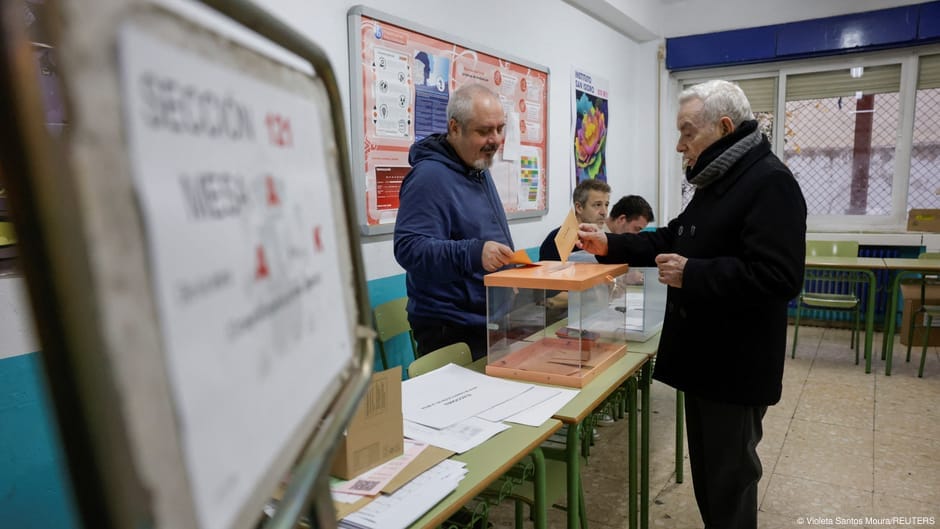
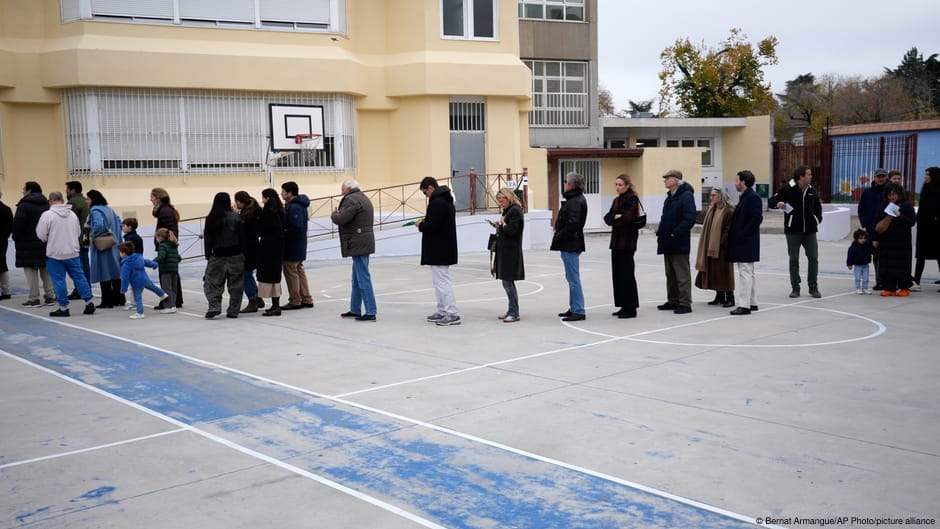
Good afternoon from Madrid as Spaniards are voting in a high-stakes snap general election that could put a far-right party in government for the first time since the country’s return to democracy after the death of Gen Francisco Franco in 1975.
Spain’s socialist prime minister, Pedro Sánchez, is widely expected to lose the election he called in October, with conservative opposition leader Alberto Núñez Feijóo set to end his eight years rule and take over as the PM in a coalition with Santiago Abascal’s far-right anti-immigrant Vox party – at least if the polls are to be believed.
It’s perhaps worth noting that the polls have been wrong in the past, and Sánchez focused his efforts in the last few days on mobilising the disenchanted left-wing voters in a hope of pulling another upset – with some indications that there might be some movement in his direction. But could it somehow be enough? But can he do it again?
The polls opened 9am local time and will close at 8pm (that’s 7pm in Britain), when we are going to get first polls from the last few days. Partial results are expected later tonight, and we should get a clear idea of who’s going to rule Spain for the next few years before we go to bed.
Join us as we are building up to the polls closing with all the background story you need to know, and I will later bring you every poll, comment, and analysis you need to know what’s going in Spain.
As is the election day tradition, there is lots of attention on party leaders casting their votes earlier today.
Socialist prime minister Pedro Sánchez urged Spaniards to vote in large numbers in a general election to help him stay in power and defy polls that indicate conservatives could take power with far-right support.
The election “is very important not only for Spain, but also for Europe”, Sánchez told reporters in Madrid.
He urged Spaniards to vote in large numbers to “send a clear message” about the government they want. Despite the polls, he continued to insist throughout the final week that his party’s victory was within reach.
The opposition leader, Alberto Núñez Feijóo, also voted in Madrid, asked voters to vote “with enthusiasm and hope,” and “without fear.”
“Today is a day when Spaniards … decide the direction of Spain. It could mark a turning point,” he said.
Far-right Vox party leader Santiago Abascal and left-wing former Barcelona mayor Ada Colau also cast their votes.
Colau, who leads the Broad Front coalition and recorded an impressive performance in an election debate earlier this week (Europe Live, Friday), said voters knew exactly what was at stake in the election.
She called on them to turn out to “defend democracy, to defend public services [and] to defend the right to housing, pensions and decent salaries”.
The turnout at 2pm pm was 45.7%, up 5pp on the last vote in 2023, official data showed. It’s the highest turnout at this point of the day since 1975, Spanish media say.
Now, theoretically, it is believed that higher turnout tends to favour Sánchez who hoped to mobilise disenchanted voters and get them to turn out for him and against Vox. That’s why he spoke of “historic mobilisation” when he cast his vote this morning.
But, but, but, an early and partial analysis of the turnout data today, done by Europe Elects, it seems to be more of a mixed picture, as actually the areas reporting the largest increases aren’t necessarily the ones most favourably looking at the prime minister.
We should get another turnout update later this afternoon at 6pm local time (5pm UK).
Although the next election was not due until summer next year, Spain’s socialist prime minister, Pedro Sánchez, called the vote in October after three rightwing and far-right parties voted down the emergency legislation that his government had proposed to address the country’s housing crisis.
Huge public anger over soaring rents exploded in September after the eviction of María del Carmen Abascal, an 87-year-old woman who was removed from her home in Madrid because she could not afford the 230% rent increase demanded by the investment fund that had bought her apartment.
Faced with nationwide protests, Sánchez’s coalition minority government put together a package of measures aimed at improving access to housing, from a ban on evictions until 2030 to the regulation of temporary lettings and lettings by room.
Sánchez opted for one of his characteristic gambles and announced the early election after the proposals were torpedoed by the conservative People’s party (PP), the far-right Vox and the rightwing Catalan separatist Junts.
The prime minister – an inveterate risk-taker whose penchant for unpredictable moves has fuelled his political survival – calculated that his opponents’ decision to block the housing overhauls could work in his electoral favour.
While Sánchez’s Spanish Socialist Workers’ party (PSOE) has managed to narrow the distance between it and the PP, which is leading the polls, to fewer than three percentage points, the right looks likely to form the next government in coalition with the far-right Vox party of Santiago Abascal.
- election
- vote
- turnout
- sánchez
- future
- balance
- spain
- europe