CS Kagwe Opens World Potato Congress, Courts Investors to Replace Imports
NAIROBI, Kenya, Oct 27 — Agriculture Cabinet Secretary Mutahi Kagwe has called on investors to expand potato processing, replace imported potato products with locally manufactured alternatives and unlock idle public land for commercial farming as Kenya hosts the 13th World Potato Congress. The Cabinet Secretary highlighted research by the Kenya Agricultural and Livestock Research Organization (KALRO) and the International Potato Center to develop a late blight-resistant biotechnology potato using the popular Shang
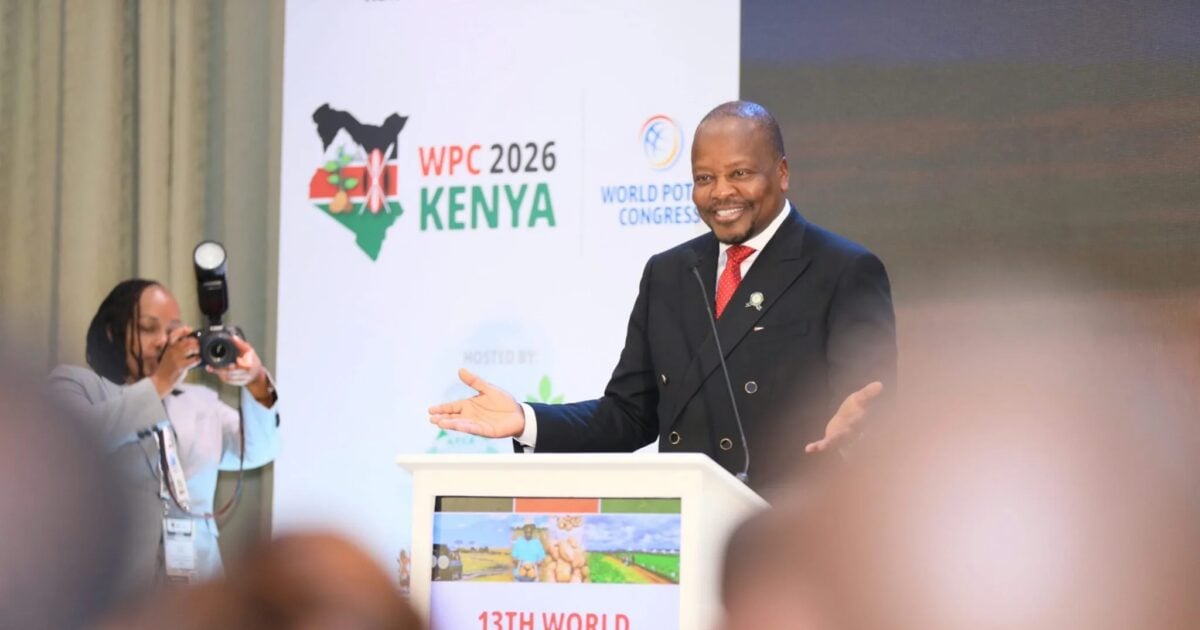
NAIROBI, Kenya, Oct 27 — Agriculture Cabinet Secretary Mutahi Kagwe has called on investors to expand potato processing, replace imported potato products with locally manufactured alternatives and unlock idle public land for commercial farming as Kenya hosts the 13th World Potato Congress.
Kagwe opened the global gathering, which is running from October 26 to 30, bringing together 1,000 delegates from 67 countries, exceeding the initial target of 600 participants from 60 countries.
The congress is the first to be held in Sub-Saharan Africa, positioning Kenya to attract investment and partnerships in potato research, certified seed production, mechanisation, storage and value addition.
Kagwe urged participants to ensure the meeting delivers tangible benefits to farmers, particularly through higher incomes, improved productivity and better access to markets.
“A food secure, healthier, prosperous farmer is also, in my considered view, a prerequisite for a safer, stable and productive society,” Kagwe said.
The Cabinet Secretary said Kenya had an opportunity to reduce reliance on imported potato products by strengthening local production and processing capacity.
During a preparatory meeting last week, Kagwe cited estimates indicating that local supply meets about 40 per cent of the market, while imports account for the remaining 60 per cent.
He urged investors to bridge the gap by establishing processing facilities and strengthening links between farmers and major buyers, including hotels, restaurants and fast-food businesses.
“This is an opportunity to substitute imports,” Kagwe said during the preparatory discussions.
Expanding domestic processing could create jobs, increase earnings for farmers and businesses, and help Kenya develop its capacity to export quality potato products.
The government is seeking to build a more integrated potato value chain in which farmers have reliable markets and processors have consistent supplies of quality produce.
At the congress, Kagwe promoted the government’s Land Commercialization Initiative, which seeks to lease idle public land to private investors on a long-term basis for agricultural production.
He invited investors to partner with Kenya in developing the land through commercial farming, irrigation, modern technology and value addition.
The initiative is intended to turn underutilised public assets into productive agricultural enterprises while expanding food production and investment opportunities.
Kagwe also highlighted the government’s broader irrigation ambitions, which include developing 50 mega dams, 200 medium-sized dams and 1,000 water pans and reservoirs.
The planned infrastructure is aimed at reducing farmers’ dependence on unpredictable rainfall and strengthening agricultural resilience to climate variability.
Kagwe described potatoes as Kenya’s second most important food and cash crop, supporting livelihoods across farming, transport, trade, processing and food services.
Citing the Kenya National Bureau of Statistics’ National Agriculture Production Report 2025, he said the country produced approximately 2.2 million tonnes of potatoes in 2024, valued at KSh72.5 billion.
Production declined from approximately 2.3 million tonnes in 2023, with the reduction partly attributed to failed short rains and excessive long rains that contributed to fungal diseases, including potato blight.
The figures highlight the challenges facing the sector despite potatoes’ importance to household food security and the agricultural economy.
Kagwe said the government was pursuing interventions focused on access to quality seed, disease management, climate-smart farming and reducing post-harvest losses.
The Cabinet Secretary highlighted research by the Kenya Agricultural and Livestock Research Organization (KALRO) and the International Potato Center to develop a late blight-resistant biotechnology potato using the popular Shangi variety.
According to Kagwe, the variety has been developed by introducing three resistance genes into Shangi and demonstrated complete resistance to late blight during field trials.
The development could help farmers reduce losses caused by the disease and lower their reliance on fungicide spraying, subject to the relevant regulatory and approval requirements.
Kagwe also cited Clone IG-70, a drought- and blight-tolerant potato variety developed through KALRO’s Potato Research Centre in Tigoni. He said the variety was progressing towards final verification.
The research forms part of efforts to develop potato varieties better suited to changing weather conditions and the disease pressures faced by farmers.
Kagwe further highlighted the KALRO Marindas Potato Sub-Centre in Kuresoi North, Nakuru County, which was commissioned three months ago.
The facility is intended to support farmers’ access to certified potato seed and training in modern agricultural technologies.
Improving access to quality planting material is considered important to raising yields, improving crop health and ensuring consistent supplies for processors and other buyers.
The government is seeking to combine research, improved seed access, irrigation and private investment to strengthen Kenya’s potato industry.
The World Potato Congress provides a platform for Kenya to pursue these objectives while connecting local farmers and agribusinesses with international researchers, technology providers and investors.
With demand for processed potato products creating opportunities for local industry, the government is positioning the sector as a potential source of employment, higher farm incomes and reduced import dependence.
- potato
- kagwe
- kenya
- congress
- production
- farmer
- food
- processing