How community-based schools could help Nigeria tackle out-of-school children crisis – dRPC

The approach, pioneered by the development Research and Projects Centre (dRPC) in Kano and Jigawa states, involves establishing small, community-run centres where children can learn through play, close to their homes.
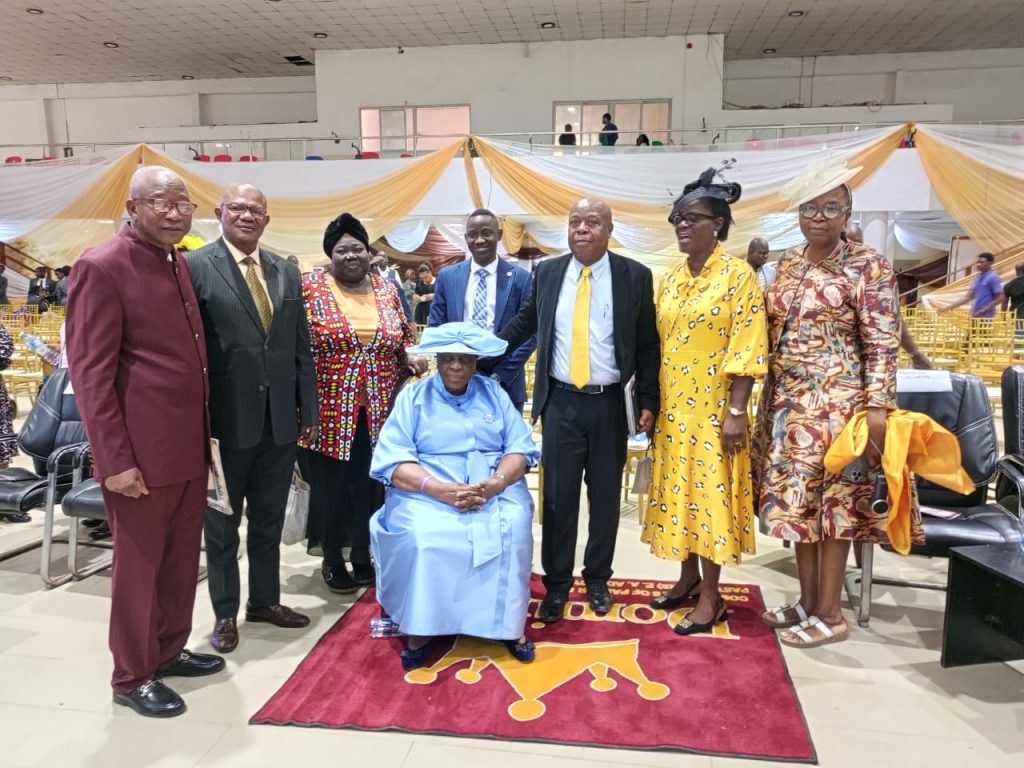
Image from left: Ummu-Kulthum Rakana, Technical Adviser (Partner Projects and Programmes) to the Honourable Federal Minister of State, Ministry of Education; Hadiza Mohammed, Honourable Commissioner, Ministry of Education, Niger State; Judith-Ann Walker, Executive Director, development Research and Projects Centre.
Community-based early childhood education centres are emerging as a potential solution to Nigeria’s out-of-school children crisis, particularly in rural communities where insecurity and transportation costs prevent young children from accessing formal education.
The approach, pioneered by the development Research and Projects Centre (dRPC) in Kano and Jigawa states, involves establishing small, community-run centres where children can learn through play, close to their homes.
The initiative comes as Nigeria struggles to expand access to early childhood education, with the 2026 Global Education Monitoring (GEM) Report by the United Nations Educational, Scientific and Cultural Organisation (UNESCO) indicating that the country has made no progress since 2015 in increasing attendance at the early childhood care and development (ECCD) level.
According to a statement by the dRPC, the report, launched on 25 March, also suggests that Nigeria is not on track to meet its 2030 education benchmark.
The organisation said the situation highlights the need for alternative approaches that can reach children who are excluded from conventional schooling, particularly those in communities affected by insecurity.
Nigeria continues to face significant barriers to education, including poverty, insecurity and unequal access to schools.
The United Nations Children’s Fund (UNICEF) estimates that about 10.5 million Nigerian children aged five to 14 are out of school, while only 35.6 per cent of children aged 36 to 59 months receive early childhood education.
UNICEF has also identified economic barriers and insecurity, particularly in northern Nigeria, as major obstacles to educational access.
In the North-west, attacks by armed groups and school abductions have forced authorities to close schools in some communities, disrupting learning and leaving children without safe access to classrooms.
According to the dRPC, high transportation costs and fears over children’s safety have also led some parents to keep children below five at home rather than send them to distant schools.
The organisation said the effects are particularly concerning in states such as Katsina, Zamfara and Kebbi, where insecurity has disrupted education in rural communities.
The dRPC said its initiative began in 2018, when it supported 43 young women who had completed secondary school to establish community-based ECCD centres.
The organisation trained the women in entrepreneurship, school management, child safeguarding, first aid and play-based learning.
It also provided learning materials, toys, colouring materials and textbooks aligned with Nigeria’s national Integrated Early Childhood Care and Development curriculum.
To establish the centres, the women received start-up capital to renovate shared spaces in their homes and communities.
The dRPC said it has continued to support them in replacing learning materials and upgrading their facilities over the years.
Unlike conventional primary and secondary schools, which generally require more extensive infrastructure and teachers with higher formal qualifications, community-based early childhood centres can be established with comparatively modest resources.
The model also places play at the centre of learning, allowing young children to develop early skills through activities suited to their age.
The dRPC said the initiative has enabled thousands of children to complete early childhood education and proceed to Local Education Authority (LEA) primary schools.
It added that some communities have supported the women who established the centres to expand their operations into primary and secondary education.
The organisation described the initiative as a shift towards more child-centred teaching, with female teachers using play-based methods rather than corporal punishment.
The dRPC said the experience has drawn interest from state governments seeking practical approaches to expanding early childhood education.
According to the organisation, the Kano State government has recognised, supported and registered its community-based centres.
It added that Kano State had expressed support for adopting the Girls-Led, Community-Based ECCD model, while permanent secretaries from Kebbi, Niger, Borno and Benue states had requested assistance to replicate the approach.
The model has also been discussed as a possible intervention for conflict-affected communities, where children may face displacement, disrupted schooling and emotional distress arising from insecurity.
The dRPC said the centres could provide young children with access to familiar caregivers and trusted teachers within their communities, while creating opportunities for play and early learning.
However, expanding the initiative to other states would require sustained funding, appropriate training, safeguarding measures and effective monitoring to ensure that children receive quality education in safe environments.
Nigeria already has a policy framework that could support the growth of non-state education providers.
The National Policy on Non-State Schools was adopted by the National Council on Education in October 2024 and officially launched in Abuja on 16 July 2025 under the Federal Ministry of Education.
The framework provides a policy context for engagement with education providers outside government-owned schools.
The dRPC said its experience demonstrates how communities can help address gaps in educational access by establishing centres that are affordable, accessible and responsive to local needs.
With Nigeria facing persistent challenges in getting children into school, the organisation said the model could be replicated across northern states, particularly in communities where insecurity and distance make conventional schooling difficult.
The challenge, however, is to translate interest from state governments into sustained implementation and ensure that community-based centres complement the formal education system.
- drpc
- community
- school
- nigeria
- child
- crisis
- centre
- approach