Christopher Capron obituary
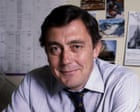
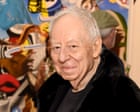
‘Ruthlessly impartial’ editor of Panorama and BBC executive who fought for the corporation’s independence during the Thatcher era Christopher Capron, who has died aged 90, was a well-regarded editor of the BBC’s flagship current affairs programme Panorama, and then the corporation’s head of current affairs, during which time he was a key player in the BBC’s battle for independence in the Thatcher era. He ran a team that included the reporters Tom Mangold and Richard Lindley, and his award-winning programmes included a 1978 investigation by Philip Tibenham and Christopher Olgiati into the…
‘Ruthlessly impartial’ editor of Panorama and BBC executive who fought for the corporation’s independence during the Thatcher era
Christopher Capron, who has died aged 90, was a well-regarded editor of the BBC’s flagship current affairs programme Panorama, and then the corporation’s head of current affairs, during which time he was a key player in the BBC’s battle for independence in the Thatcher era. He went on to form his own production company, and in 1994 became the first independent to be awarded the contract for the BBC’s Question Time.
As editor of Panorama from 1977 until 1979, he put the emphasis on original, often investigative 50-minute stories from around the world, during a time when money never seemed to be a problem. He ran a team that included the reporters Tom Mangold and Richard Lindley, and his award-winning programmes included a 1978 investigation by Philip Tibenham and Christopher Olgiati into the German rocket company Otrag testing space technology in central Africa, which won the Golden Nymph award at the Monte Carlo television festival, and Who Killed Georgi Markov?, Michael Cockerell and Philip Harding’s 1979 report on the murder of the Bulgarian dissident on British soil that pointed to the Bulgarian secret police and the KGB, which won an Emmy.
Capron never interfered during filming unless asked, and always backed his staff, as I found in 1977 when working as a producer with Lindley on an investigation into the tactics being used by the prime minister Ian Smith’s forces in what was then Rhodesia (now Zimbabwe). We were banned from returning to the country when it was broadcast.
For Mangold, Capron was “sharp and fast in the cutting rooms, he was happy mediating endless rows between reporters and producers, he fathered some great editions”. But in 1979 it came to an end, due to the then BBC rule of each Panorama editor only having two years at the helm.
He moved on to become deputy head and then head of BBC current affairs – and yet more battles, just as Margaret Thatcher had become prime minister. While deputy, he played a key role in defending Roger Bolton, the new Panorama editor, who had been dismissed after his team had contacts with the IRA. Capron was concerned it would be seen as giving in to government pressure. Bolton said: “He was rock solid in defending me and reinstating me as editor.”
In May 1982, just as the British fleet was sailing towards the Falklands, the next editor of Panorama, George Carey, broadcast a programme that included the views of those opposed to the war, alongside the government position presented by the Conservative party chair Cecil Parkinson. “A well-balanced programme, I thought,” said Carey.
Thatcher disagreed, and so did the Panorama presenter Robert Kee, who wrote to the Times disowning his own programme. Carey went to see Capron, now head of current affairs, who quietly moved Kee off to make documentaries, and Carey kept his job. “He was very good at protecting me from the politics of the BBC,” said Carey, “which obviously included governors getting agitated about politicians – notably Thatcher”.
After becoming head of parliamentary broadcasting – something of a disappointment because the Commons was not yet keen on being broadcast – in 1987 he started Capron Productions, run from an office near his London home in Wandsworth.
One of his first commissions was a follow-up for Thames Television to the controversial report Death on the Rock, which had examined the killing of IRA men in Gibraltar by the SAS. The programme had been edited by Bolton, who had left the BBC for the Thames programme This Week, and after Thames had commissioned an independent inquiry into the programme, Capron was asked to analyse their findings. “He was ruthlessly impartial,” said Bolton. “I would have expected nothing else.”
After producing Question Time for five years, Capron closed his company in 1999 and moved to Northamptonshire, where he owned the stately home Southwick Hall. His mother had lived there until her death in 1989, but Capron chose instead to stay at the Old Rectory in Stoke Doyle, another part of the estate. But he was determined to look after the 14th-century hall that his family had owned since 1841. When there were open days, Capron would be “out front manning the car parking,” said his daughter, Naomi. “No one had a clue he owned the place.”
Born in Rochester, Kent, he was the son of Christian (nee Hepburne-Scott) and Lt Col George Capron. He attended Scaitcliffe prep school in Surrey and then Wellington college, Berkshire, where he wrote in the school magazine that he “learned very little”. He did national service in Germany, then studied French and German at Trinity Hall, Cambridge.
In 1958, while still a student, he married Edna Goldrei, “a quiet Jewish girl from a Cricklewood semi,” according to Naomi. A gifted pianist, she had won a scholarship to the Royal Academy of Music, and after their marriage, she moved to Cambridge to teach piano.
Following his graduation in 1959, Capron became a studio manager in BBC Radio, and rapidly moved up through the ranks. He got an attachment to Lime Grove Studios, and worked on several programmes including 24 Hours and Midweek, before editing Tonight and Panorama and becoming a major player in British television.
One rare occasion when his two worlds came together was in 1976, when Panorama had secured an interview with the great exiled Russian writer Aleksandr Solzhenitsyn. It needed to be kept very secret, and Capron, then editor of Tonight, suggested Southwick Hall as a “safe house” where Solzhenitsyn could talk.
Capron loved sport – especially cricket. He played for the BBC’s Bushmen team where he was famous for his increasingly slow bowling. Cockerell, who played with him, said his proudest moment was when he took a hat-trick in 1996 “and it was unkindly suggested that the ball was taking so long to come down that the three batsmen had dozed off”.
He is survived by Edna, and his children, Naomi and David.
- christopher
- capron
- bbc
- editor
- panorama
- time
- obituary
- corporation