business

OPEC+ holds December oil output steady to support market stability
OPEC+ holds December oil output steady to support market stability

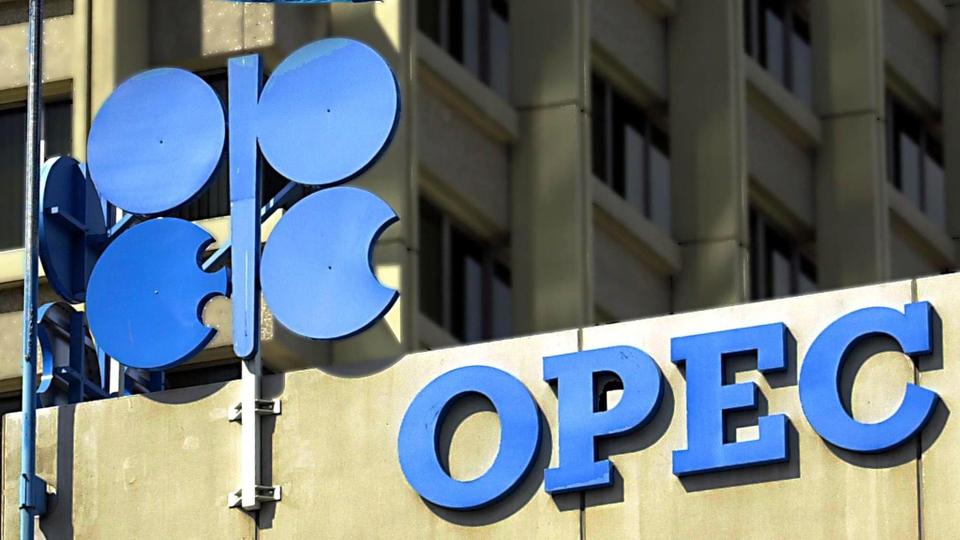
By Udeme Akpan, Energy Editor The Organisation of the Petroleum Exporting Countries and its allies, known as OPEC+, have agreed to maintain their September 2026 required production levels for December to support stability in the global oil market. The countries — Saudi Arabia, Russia, Iraq, Kuwait, Kazakhstan, Algeria and Oman — reached the agreement at a virtual meeting on November 1, 2026, where they reviewed “global market conditions and outlook”.

By Udeme Akpan, Energy Editor The Organisation of the Petroleum Exporting Countries and its allies, known as OPEC+, have agreed to maintain their September 2026 required production levels for December to support stability in the global oil market. The countries — Saudi Arabia, Russia, Iraq, Kuwait, Kazakhstan, Algeria and Oman — reached the agreement at a virtual meeting on November 1, 2026, where they reviewed “global market conditions and outlook”.

The seven producers, which announced additional voluntary production adjustments in April and November 2023, decided to retain their existing production requirements for December. In a statement after the meeting, the countries reaffirmed their commitment to cooperation among oil-producing nations and stability in the international market. The statement read: “The seven participating countries decided to maintain September 2026 required production for December 2026.” The countries also reiterated their “collective commitment to achieve full conformity with the Declaration of Cooperation”, the framework guiding collaboration between OPEC members and participating non-OPEC oil producers.

They added that they would continue to monitor developments in the global oil market through regular consultations. “The seven OPEC+ countries will continue to hold monthly meetings to review market conditions. The next meeting will be held on 29 November 2026,” the statement said. The seven countries’ combined required production level for December stands at 31.01 million barrels per day (bpd), according to the accompanying production schedule.

Saudi Arabia has the highest required production level at 10.478 million bpd, followed by Russia with 9.949 million bpd and Iraq with 4.431 million bpd. Kuwait, Kazakhstan, Algeria and Oman have required production levels of 2.676 million bpd, 1.628 million bpd, 1.007 million bpd and 841,000 bpd, respectively. Reacting to the development in an interview, an energy analyst, who spoke on condition of anonymity, said the decision could support international crude oil prices, with positive implications for Nigeria’s revenue and foreign exchange earnings.

  • oil
  • market
  • december
  • production
  • bpd
  • stability
  • country
  • level

Summaries and tags are generated automatically. Stay informed with VidiaNews.

Related news

Petrol prices set for possible November cut as crude oil drops sharply
business

Petrol prices set for possible November cut as crude oil drops sharply

Motorists in Ghana could see lower petrol prices from November 16 as a recent decline in international crude oil prices raises expectations of relief at the pumps, the Chamber of Petroleum Consumers (COPEC) has said. COPEC Executive Secretary Duncan Amoah says crude prices have fallen by more than 12 to 14 per cent over 48 hours, creating the possibility of a downward adjustment in the next fuel pricing cycle.

Read →
Policy rate of 14% between May and September 2026 was meant to preserve economic stability – BoG Governor
business

Policy rate of 14% between May and September 2026 was meant to preserve economic stability – BoG Governor

The Bank of Ghana Governor, Dr. Johnson Asiama, has strongly defended the decision by the Monetary Policy Committee to hold the policy rate at 14% between May and September 2026. Fiscal and Economic development Dr. Johnson Asiama also took the opportunity to explain to the Committee the workings of the Bank of Ghana, and how the fiscal authorities had played a major role in helping Gross Domestic Product (GDP) growth to hit 6.4% in the first quarter of this year, while inflation fell to 3.2% in March 2026 and remained below the 6-10% target band.

Read →
Naira appreciates to N1,375/$ in parallel market
business

Naira appreciates to N1,375/$ in parallel market

By Elizabeth Adegbesan The naira today appreciated to N1,375 per dollar from N1,380 in the parallel market on Thursday. Similarly, the naira appreciated to N1,349 per dollar in the Nigerian Foreign Exchange Market, NFEM.

Read →
Tokenising government securities could attract more foreign investors to Ghana – WeWire CEO
business

Tokenising government securities could attract more foreign investors to Ghana – WeWire CEO

The Chief Executive Officer of WeWire, Ebenezer Ghanney, says tokenising Ghana’s government securities could make it easier for international investors to access the domestic market and expand the government’s sources of funding. Speaking at the Africa Virtual Assets Summit (AVSA) in Accra, Mr Ghanney identified government securities as among the financial products that could be relatively easy to tokenise because existing market structures and custody arrangements are already in place.

Read →
CAFA urges unified policies to grow Africa’s fashion economy to $500bn
business

CAFA urges unified policies to grow Africa’s fashion economy to $500bn

By Benjamin Njoku The Confederation of African Fashion,CAFA, has called on African countries to harmonise their fashion policies, strengthen intellectual property protection and invest in local manufacturing as part of efforts to grow the continent’s fashion economy to $500 billion. On market access, Labode disclosed plans to establish about 10 African fashion houses across the continent, alongside outlets in New York, Paris, Milan and London, to promote African designers and connect them with international markets.

Read →