CAFA urges unified policies to grow Africa’s fashion economy to $500bn
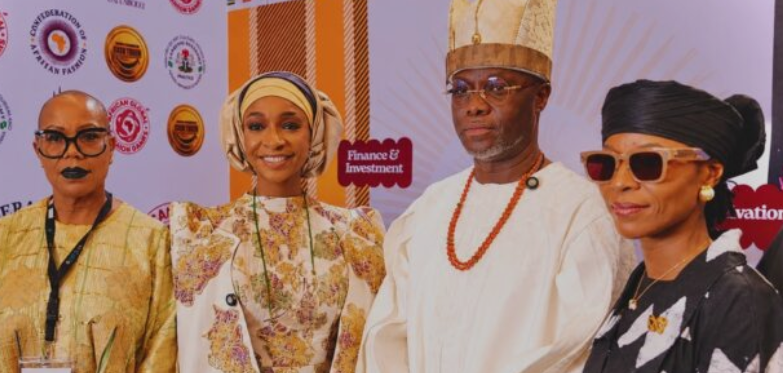
By Benjamin Njoku The Confederation of African Fashion,CAFA, has called on African countries to harmonise their fashion policies, strengthen intellectual property protection and invest in local manufacturing as part of efforts to grow the continent’s fashion economy to $500 billion. On market access, Labode disclosed plans to establish about 10 African fashion houses across the continent, alongside outlets in New York, Paris, Milan and London, to promote African designers and connect them with international markets.
By Benjamin Njoku The Confederation of African Fashion,CAFA, has called on African countries to harmonise their fashion policies, strengthen intellectual property protection and invest in local manufacturing as part of efforts to grow the continent’s fashion economy to $500 billion. The President of CAFA, Professor Lai Labode, made the call during the unveiling of the joint stand of the organisation and the Federal Ministry of Art, Culture, Tourism and the Creative Economy at the ongoing CANEX WKND 2026.
Labode said Africa had no shortage of creative talent but lacked the structures and policies needed to translate its creative potential into economic value. “In Africa, we don’t have a shortage of talent. What Africa needs is structure. Money always follows structure,” he said. He said the African Fashion Industry Growth Charter, developed by CAFA, was built around 10 pillars designed to address challenges across the fashion value chain, including policy harmonisation, raw material cultivation and processing, intellectual property protection, counterfeiting, logistics and market access.
Labode stressed the need for African countries to process their raw materials locally instead of exporting them in largely unprocessed forms, arguing that local value addition would create jobs and retain more wealth within the continent. Using cotton production as an example, he compared Brazil’s reported $5.3 billion cotton exports with China’s earnings from cotton production and processing, saying Africa needed to build its own processing capacity to compete more effectively.
He also identified intellectual property protection as a major priority, noting that African designers and creative businesses needed stronger systems to protect their original works from counterfeiting and unauthorised use. On market access, Labode disclosed plans to establish about 10 African fashion houses across the continent, alongside outlets in New York, Paris, Milan and London, to promote African designers and connect them with international markets.
He called for common intellectual property rules and standards across African countries, warning that fragmented systems could weaken the continent’s competitiveness. The CAFA president also urged member states to support the intellectual property framework under the African Continental Free Trade Area, saying the relevant protocol annexes had been passed in February 2026 but required wider participation by African countries.
Speaking in the same vein, the Minister of Art, Culture, Tourism and the Creative Economy, Hannatu Musa Musawa, identified private-sector partnerships, policy development and infrastructure as essential to strengthening Nigeria’s fashion industry. Musawa said the collaboration with CAFA should translate into tangible economic benefits, particularly job creation, while promoting African unity, cultural pride and soft power.
She disclosed that the ministry was working towards establishing an intellectual property policy to protect fashion designers across Nigeria, irrespective of their backgrounds. “Partnerships, the policies, and hubs, it is very important to put us to capacity-building, and that can only happen through infrastructure,” she said. The minister added that the ministry was working to establish creative hubs across the country to support capacity building, stimulate economic growth and create employment opportunities.
Beyond government policies and investment, discussions at the CAFA stand highlighted the need to build sustainable fashion businesses through financial literacy, proper business structures and production-cost management. Series of discussions at the event also highlighted the importance of preserving African textile heritage while adapting traditional designs to contemporary markets.
Participants identified technology as an important tool for improving garment sizing, production consistency and quality standards, particularly as African designers seek to serve international markets. They also emphasised the need to document traditional textile knowledge and protect the cultural meanings associated with indigenous patterns and designs.
Speaking on local patronage, Labode said Nigerians were increasingly embracing traditional fabrics such as adire and aso-oke rather than relying exclusively on Western-style clothing. He said Africa was already exporting about $15 billion worth of apparel and related products but could achieve greater economic returns by strengthening local production and consumption.
He encouraged Africans to incorporate locally made clothing into their everyday dressing, saying the continent needed to place greater value on its own fashion and textile products. The four-day gathering which gathers creatives, entrepreneurs, investors, policymakers and industry stakeholders from Africa and the diaspora to explore opportunities across the creative and cultural industries will round off tomorrow, with cultural activities and a Legends fo
- fashion
- cafa
- africa
- policy
- economy
- property
- country
- continent