crime

NACOC explains why it allowed suspected cocaine trafficker to leave Ghana for Lebanon

NACOC explains why it allowed suspected cocaine trafficker to leave Ghana for Lebanon

The Narcotics Control Commission (NACOC) says it monitored a Syrian national suspected of trafficking approximately 40 kilogrammes of cocaine from Ghana before allowing him to travel to Lebanon as part of an operation targeting a wider international drug network. Mr Amoah said NACOC had monitored the suspect throughout his stay in Ghana and had information about his movements, including his arrival in the country, hotel accommodation and departure.

The Narcotics Control Commission (NACOC) says it monitored a Syrian national suspected of trafficking approximately 40 kilogrammes of cocaine from Ghana before allowing him to travel to Lebanon as part of an operation targeting a wider international drug network.

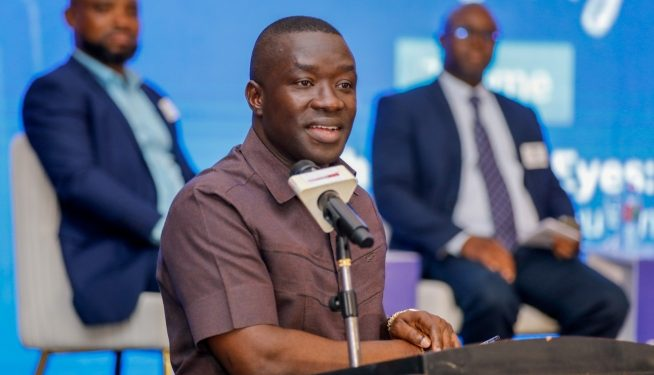
The Commission's Head of Public Relations, Francis Amoah, explained that the decision was informed by an investigative technique known as controlled delivery, which allows law enforcement agencies to track suspected drug consignments across borders to identify and arrest other members of trafficking networks.

His comments follow the arrest of the Syrian national at the Rafic Hariri International Airport in Beirut, Lebanon, on Saturday, October 31, after he arrived from Accra with the suspected cocaine concealed in two pieces of luggage.

Mr Amoah said NACOC had monitored the suspect throughout his stay in Ghana and had information about his movements, including his arrival in the country, hotel accommodation and departure.

He acknowledged concerns surrounding the fact that the suspect travelled through the Kotoka International Airport but explained that the operation was part of efforts to pursue not only individual suspects but also their associates in international drug trafficking networks.

“It is a transnational organised crime, and one country does not have all the requisite logistics to be able to fight and fight it well,” he said

Explaining the controlled delivery approach, Mr Amoah said the strategy involves allowing a suspected trafficker and the consignment to reach another jurisdiction so that authorities can apprehend the individual and other members of the network.

“One thing that we do as far as our work is concerned is what we call the controlled delivery. Controlled delivery is where you know about the person, what the person is carrying, but you want the person to go to the other side because when the person gets to the other side, the person, not him alone but the network associated with him, will be arrested,” he explained.

  • nacoc
  • cocaine
  • ghana
  • lebanon
  • network
  • person
  • trafficker
  • delivery

Summaries and tags are generated automatically. Stay informed with VidiaNews.

Related news

Controlled delivery allows drug suspects to remain unaware of investigations – NACOC
health

Controlled delivery allows drug suspects to remain unaware of investigations – NACOC

The Deputy Director of the Narcotics Control Commission (NACOC), Alexander Barimah Twum, has explained that suspected drug couriers are deliberately kept unaware during controlled-delivery operations to enable investigators to identify other members of trafficking networks and uncover weaknesses in the country’s enforcement systems. His explanation follows the seizure of 46.7 kilogrammes of cocaine at the Rafic Hariri International Airport in Beirut, Lebanon, in a consignment that originated from Accra.

Read →
Drug bust: Beirut officials’ accounts raise questions about NACOC’s cocaine ‘controlled delivery’ claim – Bright Simons
crime

Drug bust: Beirut officials’ accounts raise questions about NACOC’s cocaine ‘controlled delivery’ claim – Bright Simons

The Honorary Vice President of IMANI Africa, Bright Simons, has questioned the claim by the Narcotics Control Commission (NACOC) that the movement of a 46.7kg consignment of suspected cocaine from Accra to Beirut was part of a controlled delivery operation. He further questioned the apparent absence of Lebanon’s Central Narcotics Bureau, which he described as the equivalent of NACOC and part of the country’s Internal Security Forces (ISF), from the operation.

Read →
4.8 tonnes of marijuana with over US$1m street value heading towards Nigeria seized by Ghana Navy
crime

4.8 tonnes of marijuana with over US$1m street value heading towards Nigeria seized by Ghana Navy

Two large wooden boats carrying 117 sacks of substances suspected to be marijuana, with an estimated street value of more than US$1 million, have been intercepted by the Ghana Navy in an intelligence-led operation on the Volta Lake estuary at Ada in the Greater Accra Region. Assembly The Municipal Chief Executive (MCE) for Ada East, Kenneth Kofi Kabu Kanor, who also addressed the press conference, expressed concern about the growing challenge of drug abuse and its impact on families and communities.

Read →
10 young fintech innovators to pitch for national-stage places at MoMo Fintech Lab Accra Hackathon
business

10 young fintech innovators to pitch for national-stage places at MoMo Fintech Lab Accra Hackathon

Hosted by MobileMoney Fintech LTD (MMFL), the Accra Zonal Hackathon Pitch Competition will take place at 9:00 a.m. at the Ghana College of Physicians and Surgeons, Accra. The MoMo Fintech Lab is organised in partnership with the Bank of Ghana, with support from ecosystem partners including GCB Bank, Hubtel, appsNmobile, Zenith Bank, First National Bank, Blue Penguin, Korba, Fidelity Bank, Afrifanom (VaMiJo) and JUMO.

Read →
Raise your children to carry the business torch — Salem Kalmoni advises Ghanaian entrepreneurs
business

Raise your children to carry the business torch — Salem Kalmoni advises Ghanaian entrepreneurs

The Chief Executive Officer of Japan Motors Ghana, Salem Kalmoni, says exposing children to the daily operations of a family business while they are young helps them understand its values, culture and responsibilities long before they are expected to take over. Japan Motors Trading Company Limited traces its roots to Kalmoni & Sons, a family trading and transport business established by his grandfather, the late Salem Kalmoni, in 1920.

Read →