Country diary: The autumn glory of a tulip tree
The autumn glory of a tulip tree. Their summer flowers provide the name and the fame, but this species is arguably at its best now Beech mast crunches underfoot, and the occasional conker catches the sunlight, tiny beacons leading me to Camp Hill, south Liverpool, with its distant views over the Mersey estuary.
Liverpool: Their summer flowers provide the name and the fame, but this species is arguably at its best now
Beech mast crunches underfoot, and the occasional conker catches the sunlight, tiny beacons leading me to Camp Hill, south Liverpool, with its distant views over the Mersey estuary. Goldfinches erupt from desiccated knapweed, and a flock of pink-footed geese fly overhead. For once, the birds are not my goal, but a tree: the tulip tree (Liriodendron tulipifera).
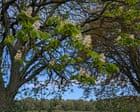
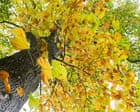
Every autumn, the Camp Hill tulip tree flaunts its flamboyant presence: the Lady Gaga of the parkland. Named because its flowers resemble a tulip flower, and its leaves a tulip silhouette, few can resist its tulle lace canopy of butter-gold leaves. The luminescence is enhanced by the sheen of its leaf cuticles, and the fissured trunk adds yet more sensory impact. Yet this year there is a strangeness: instead of the golden monotone you would expect of this moment, there is a messy mix of different shades. Might the summer drought have disrupted the pigment battle between anthocyanins and carotenoids?
Tulip trees were introduced into Britain from North America in the 17th century. Liverpool’s Victorian city planners perceived them as an ideal exotic tree for many parks. In south Liverpool alone, they can also be found in Calderstones, Reynolds and Princes parks.
On a day sandwiched between two storms, I head into the centre to find another, at the Bluecoat building – Liverpool city’s oldest surviving building, built in 1717. Hidden within is a garden, an oasis among the hustle and bustle of city life, and in times of climate heating a critical haven of shade and cool.
Following the demise of two ash trees to dieback, a tulip tree was planted in 2023, along with handkerchief and foxglove trees (Davidia involucrata and Paulownia tomentosa) – two fine species in their own right. This one has not yet achieved the grandeur of its park siblings; it is an adolescent, its grey-brown, smooth, leggy trunk carrying its youthful crown. Despite its immaturity, the leaves already sport its characteristic colour, a welcome harbinger of what is to come: a tall, broad, handsome tree that will provide vital shade during times of future heat. Long before then, though, these leaves will drop, and reveal the tree’s skeletal form.
- tulip
- tree
- autumn
- flower
- country
- diary
- glory
- liverpool