‘Everything is so out of whack’: UK trees experience spring six months early
Mild autumn temperatures causing premature flowering and raising concerns for pollinators, say experts Trees are experiencing an “early spring” because of mild UK temperatures this autumn, with experts warning this could cause long-term harm to pollinators. Last month was warmer than average across all parts of the UK, with October marking the ninth consecutive month with above-average mean temperatures.
Mild autumn temperatures causing premature flowering and raising concerns for pollinators, say experts
Trees are experiencing an “early spring” because of mild UK temperatures this autumn, with experts warning this could cause long-term harm to pollinators.
Last month was warmer than average across all parts of the UK, with October marking the ninth consecutive month with above-average mean temperatures.
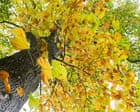
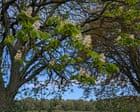
Chris Nichols, the head of conservation outcomes at the Woodland Trust, said the mild weather this autumn meant horse chestnut trees were flowering and showing signs of next year’s spring growth more than six months early.
During the extreme heat this summer, many trees underwent “early autumn”, where they wilted and lost their leaves prematurely. Experts said England’s ancient oak trees were dying as a result of high temperatures and drought, as trees and ecosystems struggle to adapt fast enough to the changing climate. Scientists have said the higher than average temperatures are only possible due to the climate crisis, primarily driven by the burning of fossil fuels.
“It’s crazy, everything is so out of whack,” Nichols said, adding that the early spring was particularly concerning for pollinators.
“Trees need to flower at a certain time of year so they’re in sync with the insects. It’s like an ecological mismatch and it’s concerning in terms of the resilience of trees in the long term if they’re out of whack with the other species that they rely on,” he said.
Dr Kate Lewthwaite, a citizen science manager at the Woodland Trust, said trees flowering early was a sign of stress.
She said she suspected the drought prompted trees to shut down essential systems, similar to what happens in winter. “When the rains came, it encouraged them to start spring flowering out of season,” she said.
This, in turn, could cause the whole tree to die or be forced to resprout from dormant buds on the trunk or branches in spring, making the canopy smaller next year.
“We need to take action to help our woods and trees become more resilient to these challenges, such as rewetting woodland and slowing the flow of the rains we do get,” Lewthwaite said.
Kevin Martin, the head of tree collections at Kew Gardens, said trees in the arboretum were also going into early spring.
“The trees are all a bit confused because they’ve been so stressed this summer,” he said. “Essentially trees went into dormancy this summer and then with these warm, mild conditions they’re now going to back into growth, which means they won’t have those buds again in the spring.”
Martin said the true impact of this would not be known until spring 2028.
Earlier this summer, experts warned high winds potentially associated with El Niño could cause widespread mortality among tree species already weakened by the prolonged period of extreme heat and drought.
Martin said this impact was observed during Storm Austen and Storm Boelo, with an increase in failures compared with what would be expected during storms recording such wind speeds.
“Trees have been so stressed this year and they’ve put on very little growth, especially in the south-east where the drought has been really significant, and because of that we have, and we will see, more failures due to the storms because they’re just weakened from that stress,” he said.
- spring
- month
- temperature
- whack
- tree
- experience
- autumn
- pollinator