Why a student protest movement is challenging 12 years of Vučić rule in Serbia

After two years of student protests, Serbians vote on Sunday in elections that could bring down the ruling party.
Final campaign rallies have taken place across Serbia, ahead of a snap election billed as a referendum on the country's future.
After two years of student protests, Serbians vote for a new parliament on Sunday in elections that threaten populist leader Aleksandar Vučić's 12 years in power.
The main threat to Vučić's dominance in Serbian politics comes from a two-year-old student movement, but there are concerns surrounding the fairness of the vote.
They have no obvious leaders and are not used to politics, but the "Student List-Students Win" movement has attracted anti-government voters across Serbia.
The Student List is fielding candidates from across Serbian society - and as he joined students marching towards Belgrade, lead candidate and cardiologist Ilija Srdanović said history was being rewritten: "The energy is unstoppable."
It all began on 1 November 2024, when the concrete canopy collapsed outside Novi Sad train station, in Serbia's second biggest city, killing 16 people.
The tragedy was seen as emblematic of corruption and negligence in Serbia. Critics linked the station's fatally flawed renovation to a president who had closely associated himself with the project.
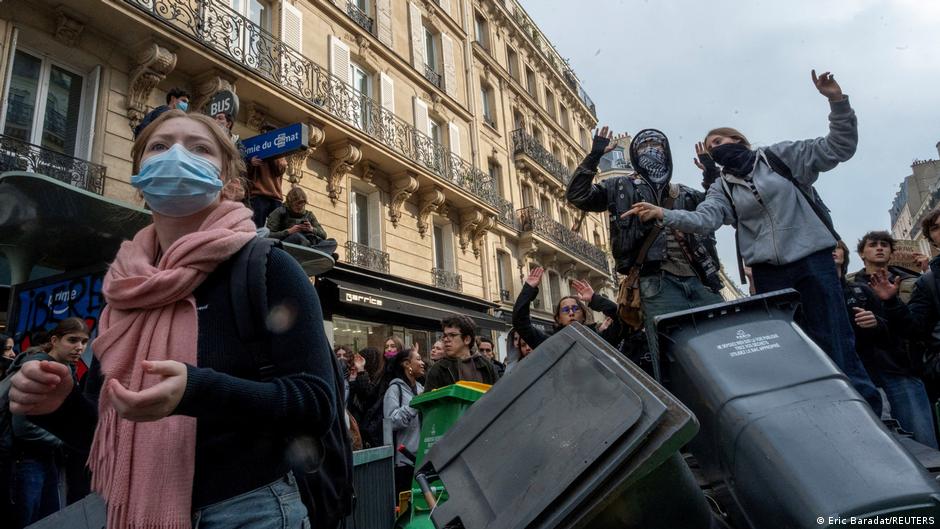
What started as weekly student protests demanding justice on university campuses and city streets soon became a national movement, often at a local level, that encompassed far more sections of Serbian society, including farmers, actors and judges.
The Serbian Progressive party (SNS), founded by Vučić, was shaken and within weeks the prime minister resigned. Belgrade saw one of its biggest ever protests in March 2025, and while the leaderless student movement increased in strength, they organised themselves through student assemblies or plenums.
At the last election in 2023, Vučić's SNS was challenged by a loose coalition of pro-EU parties, that later fell apart. This time he faces a far clearer threat from a student movement that has shunned the mainstream opposition parties.
Anger lingers in Serbia after train station tragedy
Vučić has spent two terms as president and cannot seek a third term, so he is now leading his party with the aim of returning to the post of prime minister, which he left in 2017.
The right-wing populist leader has doubled down on unfounded allegations that his opponents are not so much students and professors, but "mighty great powers" seeking to overthrow Serbia. And he has vowed an end to what he sees as the politicisation of schools and universities.
Vučić has steered a careful path with the West, continuing to back Serbia's candidacy for the European Union, while refusing to impose sanctions on Russia for its full-scale war in Ukraine. Several government ministers attended the Belgrade funeral of war criminal Ratko Mladić, prompting EU anger at his "glorification".
Helena Ivanov of the Henry Jackson Society, a foreign policy think tank, says the students have been able to mobilise the masses in a way traditional opposition parties have not been able to - and this is Vučić's biggest challenge since he came to power.
"He's been running in all elections Serbia has had since the introduction of multi-party election system - so obviously defeating him isn't going to be easy, but this time around President Vučić isn't going to have an easy time either," she told the BBC from Belgrade.
Embattled Serbian president resigns, paving way for early elections
Serbia has a parliament with 250 seats and there is just one national constituency under proportional representation.
Voting runs from 07:00 (06:00 GMT) and ends at 20:00 on Sunday.
There are 6.45 million registered voters and anyone over the age of 18 gets the right to choose which party's list of candidates to vote for.
Sunday's vote involves 18 lists but only seven of them are fielding the full 250 candidates. MPs are elected according to how much support the list receives if it wins more than 3% of the vote.
Several opposition parties have pulled out in favour of the Student List.
Far from being students themselves, the candidates are made up of teachers and university professors, actors and doctors, farmers and scientists.
They still have no leaders, but top candidate Ilija Srdanović is a cardiology professor in Novi Sad, while others include ex-basketball star Dejan Bodiroga, renowned actor Tihomir Stanić and former National Bank of Serbia governor Dejan Šoškić.
Under an 11-point programme, the student movement wants to:
eradicate corruption by forming a police unit to arrest those responsible for it
purge officials in the internal affairs ministry of anyone who broke rules on cracking down on protesters, or anyone linked to organised crime
reform Serbia's skewed media scene and free the public broadcaster of political control
stop recruiting party loyalists to head public enterprises
Vučić and the SNS party deny corruption and seeking to influence the media.
European observers are monitoring Sunday's vote, but even beforehand the Parliamentary Assembly of the Council of Europe (PACE) has spoken of a "tense and divisive electoral climate" and a "referendum-like atmosphere".
Serbia's election commission says elections are free and the ballot is secret. However, independent watchdog CRTA has warned of a campaign that has seen threats and physical violence, and opposition activists subjected to surveillance.
In a report ahead of the vote, it said instead of ensuring equal conditions for candidates, "a range of institutions, from ministries to local governments, became involved in electoral engineering".
Serbian media has seen almost three-quarters of TV coverage devoted to government representatives, the watchdog complained, and alleged that ministries and local governments had become caught up in "electoral engineering".
Some 160 attacks have been recorded on media and journalists in Serbia this year, says the European Centre for Press and Media Freedom.
- student
- protest
- movement
- rule
- serbia
- vučić
- serbians
- election