The Pathology in Ghana Politics: Examining institutional governance and the non-aligned citizen

To the international community, Ghana’s Fourth Republic is a democratic success story—a peaceful vanguard of stability in West Africa defined by smooth transitions of power. My perspective is shaped by my professional background in construction—built on a foundation in Building Technology from KNUST, a Master’s in Quantity Surveying from the University College of Estate Management (UCEM), and a Project Management Professional (PMP) certification.
To the international community, Ghana’s Fourth Republic is a democratic success story—a peaceful vanguard of stability in West Africa defined by smooth transitions of power. But for those of us observing from the diaspora, the diagnosis is far more troubling. Even writing from Lebanon, Tennessee, the structural fractures of our homeland are impossible to ignore. Our democracy is suffering from a chronic political pathology. It is a systemic disease where the state machinery has been captured by a hyper-partisan duopoly, turning the rights of citizenship into a conditional privilege.
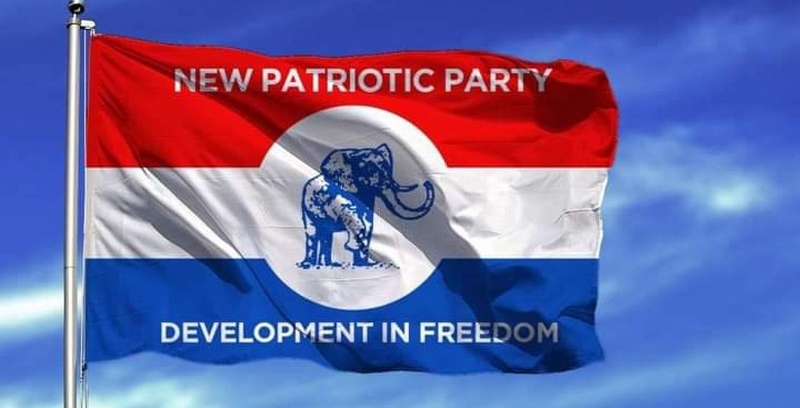
I do not write this as a typical political commentator or an opposition operative. Historically, my values have aligned with the New Patriotic Party (NPP). I have traditionally voted for the elephant, believing in its foundational promises of property-owning democracy, free-market capitalism, and individual liberty. But I am not a politician. I do not carry a party card, I do not attend rallies, and I refuse to engage in blind partisan foot-soldiering. My perspective is shaped by my professional background in construction—built on a foundation in Building Technology from KNUST, a Master’s in Quantity Surveying from the University College of Estate Management (UCEM), and a Project Management Professional (PMP) certification.
I look at our country not through the lens of political bias, but through the objective metrics of cost, value for money, structural integrity, and project viability. And from a strictly professional standpoint, the way our built environment and national resources are managed is deeply alarming. Independent citizens—who refuse to wear party colours—are facing systematic economic, institutional, and civic marginalisation.
This political illness is historically path-dependent. The fierce, toxic rivalry we see today between the NPP and the National Democratic Congress (NDC) is the modern mutation of the existential rifts that fractured our nation immediately after independence in 1957. The ideological divide between the Danquah-Busia-Dombo tradition and the Nkrumaist camp was not just a debate over policy; it became an all-or-nothing struggle over the identity of the state.
When the First Republic weaponised the Preventive Detention Act (PDA) in 1958 to lock up political opponents without trial, it set a dangerous precedent: state power was not a tool to serve the collective public, but a shield to protect your allies and a sword to destroy your rivals. Decades of military interventions only reinforced this survivalist mindset. By the time the Fourth Republic was established in 1993, our political parties had evolved from policy-oriented civil associations into militarised patronage machines designed to capture the executive branch at all costs.
As a project manager, it is impossible to ignore the pathological symptoms currently draining the wealth of our nation under this duopoly. Chief among these is a fundamental shift in the very purpose of governance: our governments have completely ceased to be run on long-term sustainable policies and are instead run entirely on short-term infrastructure projects.
In an ideal framework, capital projects are born out of holistic national policies designed to solve institutional problems. In Ghana's pathological landscape, this project lifecycle has been completely inverted. Sound policies are abandoned because they require rigorous, transparent planning. Infrastructure projects, on the other hand, are highly visible, easily manipulated, and perfectly structured to feed a predatory economic loop.
This project-driven extraction operates as a criminal, unwritten convention. It is an open secret within the political class—understood, executed, and relied upon by actors across the partisan divide, even as they vehemently deny its existence in public forums.
This unlawful convention serves three destructive functions:
This project-driven extraction loop is not a theoretical concept; it is written into the concrete, unquantified variations, and abandoned iron rods across the country. Both parties have mastered this art, and the history of our housing and road sectors tells the full story.
Look no further than the Kufuor Affordable Housing Project. Initiated with noble intentions under the NPP, it was systematically abandoned when power shifted in 2009. The incoming NDC administration left those structures to rot in the bush, purely out of partisan spite, to ensure the NPP received no retrospective credit. But when the NDC launched its own Saglemi Housing Project, the pathology mutated from spite to hyper-extraction. Millions of dollars were expended on a project that became an incomplete ghost town, plagued by allegations of altered contract specifications and massive financial inflation, rendering it completely useless to the desperate Ghanaian family.
The transportation corridor between our two largest cities is the ultimate testament to this cyclical extraction. Decades ago, the Accra-Kumasi Expansion Project was launched to dualise the highway. Over the years, the project was fragmented into endless, non-competitive bypasses distributed to local party elites, ballooning costs by billions of cedis while leaving the road a treacherous, incomplete death trap. Yet, rather than completing what was started, the government introduced the Accra-Kumasi Expressway—an ambitious megaproject projected to cost billions of dollars. We know that under the current winner-takes-all architecture, a multi-billion-dollar budget serves as the ultimate honeypot for contract inflation and campaign financier repayments.
Nowhere has this project-extraction pathology dealt a heavier blow to Ghana’s future than in the education sector. Education, which should be protected as a sacred public good, has instead been turned into a vector for political point-scoring and capital extraction.
Consider the previous NDC administration's Community Day School Projects (E-Blocks). Marketed as an ambitious policy to expand access, it quickly devolved into a textbook example of project-driven profiteering. Contracts were awarded to political favourites for massive capital outlays, only for dozens of these structures to be left completely abandoned or structurally incomplete when power shifted. Rather than serving students, the physical buildings were treated as extraction vectors for mobilisation fees, leaving a trail of half-built concrete monuments in remote areas where students had no means to commute.
When the NPP assumed power and executed the Free SHS educational transformation, it was a monumental policy shift that undeniably opened secondary education to millions of underprivileged Ghanaian children. However, the sheer volume of enrollment immediately overran our existing infrastructure. To prevent mass exclusions, the government had to implement the temporary double-track system.
Instead of a constructive, policy-focused national dialogue on how to build the required capacity to phase it out, the double-track system was instantly weaponised by the opposition. Driven by the desperate desire to recapture power, opposition leaders flooded the airwaves to bastardise the policy, launching aggressive campaigns promising its immediate cancellation within one year. It was pure political opportunism: promising to yank away a structural shock absorber without having the physical classrooms in place to absorb the children. The health, stability, and psychological well-being of Ghanaian teenage learners were callously gambled with just to win an election.
The pathology expresses itself with equal clarity in the weaponisation and hyper-profiteering of galamsey (illegal small-scale gold mining). Galamsey has long ceased to be a simple story of desperate, unemployed youth scratching the earth for survival. It has been systematically transformed into a highly organised, multibillion-dollar illicit cartel ecosystem fully protected by the NPP-NDC political duopoly.
Investigations confirm that galamsey proceeds serve as a primary liquid engine fueling Ghanaian political campaigns. When in opposition, both parties weaponise the crisis. They demonise the ruling government’s enforcement measures in urban centres while quietly visiting mining enclaves to assure illegal operators that they will be protected once a power shift occurs. When they achieve power, state-led military raids are deployed not to eradicate the illegality, but to clear out independent actors and secure the lucrative mining rents exclusively for the ruling party’s elites and financiers.
While politicians, constituency executives, and foreign criminal networks cash in on billions of dollars in untaxed gold, the ordinary citizen pays the ultimate price with their health and their future:
The duopoly is literally trading the biological and ecological future of the Ghanaian child for quick liquidity to print campaign posters and buy votes.
The ultimate victims of this structural violence are the non-aligned citizens—the growing demographic of Ghanaians who refuse to pledge blind allegiance to party colours. In Ghana’s pathological system, access to the state is mediated entirely by partisan identity.
For the independent citizen, this marginalisation is experienced in three distinct ways:
The pathology in Ghana's politics is an integrated, self-sustaining systemic disease. It thrives by consuming public resources, destroying the ecosystem, and marginalising the independent observer. Our current stability is deceptive; a system that systematically poisons its own water, alienates its youth, and starves its independent businesses cannot endure indefinitely. Even as someone who has traditionally supported the NPP's philosophy, I recognise that the current path is unsustainable.
Healing this country requires structural surgery, not moral appeals:
Only by dismantling this neo-patrimonial duopoly can Ghana transition from a nominal electoral democracy to a genuinely inclusive republic where citizenship, not a party card, dictates a person's worth.
- project
- ghana
- governance
- policy
- pathology
- citizen
- party
- republic