John Frieda obituary
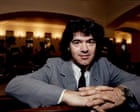
Hair stylist to the stars who created the ‘Purdey’ bob and the groundbreaking Frizz Ease product range All beauty chains now have metres-long shelves of products for curly, coily and wavy hair, and among the proliferating varieties of “curl custard” and “scrunching jelly” there is always the purple livery of John Frieda’s Frizz Ease range, developed from his original 1991 silicon-based serum. He scissored and scruffed flat hair into cheeky urchin cuts, as he did for Shirley MacLaine and Diana, Princess of Wales (Frieda had arrived to style a secretive portrait session for the photographer…
Hair stylist to the stars who created the ‘Purdey’ bob and the groundbreaking Frizz Ease product range
All beauty chains now have metres-long shelves of products for curly, coily and wavy hair, and among the proliferating varieties of “curl custard” and “scrunching jelly” there is always the purple livery of John Frieda’s Frizz Ease range, developed from his original 1991 silicon-based serum. It was the first care product to be sold for – and likely the earliest even to acknowledge – the exasperating existence of frizz.
Frieda, who has died aged 75, respected all types of hair, whether in or out of fashion. He added sculpted shape to straight locks, notably for Joanna Lumley’s pudding-basin “Purdey” bob for The New Avengers on television in 1976, which became a nationwide fad. He scissored and scruffed flat hair into cheeky urchin cuts, as he did for Shirley MacLaine and Diana, Princess of Wales (Frieda had arrived to style a secretive portrait session for the photographer Lord Snowdon not knowing Diana was its subject.)
Frieda had entered the profession in the 1960s when Vidal Sassoon’s slick geometry was the radical novelty, but he was always considerate of volume and kink, which eventually emerged as the mussy Big Hair of the 80s, although unsupported by anything more than lacquer or a dollop of the new polymer gels.
For his own salons, Frieda devised mass-building formulas, and in 1988, Boots approached him to turn them into commercial products. He demonstrated his thickening lotion on television’s Richard & Judy daytime show, and Boots immediately ordered an extra 1.2m bottles plus 860,000 tubs of styling wax.
That was the deciding moment of Frieda’s life and considerable fortune, and a major point of change in the history of hair. Frieda had started as a junior in the West End of London salon of Leonard Lewis — “Leonard of Mayfair” — who quickly selected this lad of serious demeanour as a detail-conscious assistant, especially for fashion shoots. Frieda adopted his mentor Lewis’s belief in co-operation between stylist and client, and to never impose a look on an unwilling head.
He learned technique fast and was inventive with cuts at a time when they were the most important aspect of styling – that Purdey shape merging fringe and hair was Frieda’s riff on Lewis’s early 60s mop-heads for the Beatles, which swung and rippled in action. Frieda would cut the Beatles’ hair too, and join them afterwards for a Wimpy and a natter about eastern philosophy.
Frieda was unruffled by the many impressive names he met on Vogue shoots with photographers such as David Bailey, Barry Lategan and Clive Arrowsmith in the late 60s and early 70s, as he discovered that like everybody else they had image problems he could help solve. He was quietly sympathetic to anyone who faced the mirror with him, he mingled with and coiffed movie, music and sports stars, but, unusually, he did not dish.
Frieda’s own salon, opened in 1976 in New Cavendish Street on the edge of Marylebone, not then a fashionable zone, was considered the buzziest of venues, and he personally was booked out months ahead, yet the premises were formal rather than what he called “pally”, and the staff copied his discretion. What was murmured in Frieda’s stayed in Frieda’s.
He was born to the business, the son of Isidore Frieda, who owned a salon in Ealing, west London, and had been sometimes called to the Hyde Park hotel to shave or style its celebrity guests, and his wife, Hannah (nee Docherty). Frieda’s grandfather, a Jewish émigré from Poland and pogroms, had worked as a barber in Fleet Street.
The boy went to King’s school, Harrow, and picked up grips in the salon on Saturdays. At 16 he decided to defy his father’s ambition that he should become a doctor, and dropped out of education to be a hairdresser. His father then used all possible connections for him to skip rungs of the career ladder and become an apprentice in Lewis’s salon.
Frieda Jr might have stayed there indefinitely, since Lewis had appointed him creative director, but among the stars he styled was the pop singer Lulu, whom he married in 1976 with many of the current smash-hits Top 10 as guests.
He did not wish to be known just as “Mr Lulu” – he wanted a solid empire of his own. Through his early 20s Frieda had bought property with his substantial earnings (his major bit of youthful flash was a gold Rolls-Royce; he accumulated homes and an art collection for the rest of life), so he financed that first salon, later opening in New York, Los Angeles, Ibiza and other places.
After more than a decade of leading salons and working in them, Frieda wearied of individual heads, feeling he had run out of tonsorial challenges, and so that massive 1988 Boots order came as a release.
Frieda had met Gail Federici, an American executive in the haircare industry, and they formed a partnership, John Frieda Professional Hair Care, in 1989 to explore this market. Her hair frizzed – as Frieda pointed out, so did the strands of 60% of western populations – and suggested he work at first on a temporary fix to allow a woman to walk out smooth-headed into a damp day without instant disaster. The resultant serum was joined by related products, plus ranges to enhance colour and curls.
In 2002 Frieda and Federici sold the company to the Japanese Kao Corporation for $450m. He retained salons, staying closely associated with the Mayfair flagship where products were trialled.
When Frieda began styling, women had wanted a great hairdo – a cut and set, a fixed look as if wearing a hat made from their own-grown material. What they want in the 21st century is to look as if they have great hair, its natural self in the best condition, straight or kinked. Frieda was the pioneer in making that change in aesthetics a practical possibility.
His marriage to Lulu ended in divorce in 1991. Avery Agnelli, the widow of the industrialist Giovanni Agnelli, became his partner in 2002, and they married in 2019.
He is survived by her, his son, Jordan, from his marriage to Lulu, his children, Jackson and Leyla, from his marriage to Avery, and his stepdaughter, Asia.
- frieda
- john
- hair
- frizz
- product
- obituary
- purdey
- bob