Stacey Dooley’s Australia: Off the Beaten Track review – presenting this fluffy show is beyond her
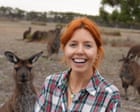
Stacey Dooley’s Australia: Here she is on Channel 4, fronting the inoffensive schedule-filler Stacey Dooley’s Australia:
This trip to Kangaroo Island is pleasant enough, but the investigative reporter seems lost when tackling something that doesn’t feature exploitation or outrage
For years on BBC Three, Stacey Dooley equalled strife. Child labour, sexual exploitation, poverty, religious extremism, homelessness: all were ably tackled by a presenter who stood out for her lack of lofty TV-star pretension and her knack for asking the direct questions that were in audience’s minds.
Since winning Strictly Come Dancing in 2018, she has gone a bit more mainstream, so although the old Dooley is still around – she’s in the middle of a three-documentary run on BBC One, dealing with murder, suicide and addiction – she’s also doing fluffier personality work. Here she is on Channel 4, fronting the inoffensive schedule-filler Stacey Dooley’s Australia: Off the Beaten Track. You can’t say she hasn’t earned a break.
However, trauma does inform her opening sojourn, on which she takes the 45-minute ferry ride south-west from Cape Jervis in mainland South Australia to Karta Pintingga, AKA Kangaroo Island. Australia’s third-largest island is a bit bigger than Cornwall, but home to just 5,000 people. Seven years ago, half the island was destroyed by bushfires. Its communities have been carefully rebuilding since.
The first stop is Kangala Kangaroo and Wildlife Rescue, set up on the fly during the fire by Lisa and Jared Karran. They saved orphaned kangaroos, koalas, wallabies and possums from the flames and have carried on looking after them. Lisa tells a stunning story about finding kangaroo mothers standing on scorched ground, having protected their offspring by lifting them back into the pouches they’d lived in when they were smaller. The joeys were safe; the mothers’ feet were, fatally, burned to the bone.
Flashes of singular colour like that are what this kind of documentary needs, but as Dooley’s journey continues, they prove to be rare. The fire was awesomely horrific in ways that are difficult to imagine or, it turns out, to articulate. “It’s hard to put into words,” says Ben, a sheep farmer who lost his house and flock to the inferno. We need you to try, mate.
In Ben’s defence, it’s not his job to describe stuff – that’s what Dooley is for. Yet in the face of an extraordinary but straightforward situation that doesn’t feature exploitation or outrage, she struggles. On her way to Ben’s farm, she watches a smartphone video of his engulfed back yard, which she says is the first footage of the fire she’s seen. This turn-up-and-wing-it approach doesn’t work when unique emotions need to be unlocked. “The video – this is such an obvious thing to say, but the video – utterly, utterly terrifying,” she says to Ben, which doesn’t give him much to work with.
The fine art of knowing what to say becomes even trickier when Dooley leaves the aftermath of the fire behind and enjoys the pure pleasures of the island, such as a boat trip to swim with seals. Having admitted to being surprised that the animals have fur, Dooley sums up her joyful anticipation: “This feels like such – such an amazing opportunity!” The last phrase is in the sarcastic, self-mocking tone of someone who has caught themselves spouting a platitude halfway through the sentence.
The seals look … nice. Cute. But Dooley, bobbing cheerfully in the cold ocean, is amazed and so, in her piece to camera to take us to the ad break, she has to explain why. “I didn’t quite realise it would be this spectacular. This has been like, for me, top tier. Unbelievable!” What would, say, Bill Bailey or Jane McDonald have come up with there? Surely nothing so bland.
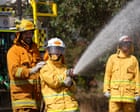
The obligation to conjure something from nothing means light factual can be, in its own way, more challenging than reporting from a war zone or a cult. Happily, there are signs that Dooley will find her voice. It doesn’t happen when she returns to the theme of the bush blazes, visiting a fire station where she interviews the guy in charge, Rodney, about swathes of his patch being obliterated (“It must have been devastating”) and learns that the worst of it came from a night when Kangaroo Island was hit by 16 lightning strikes (“That’s unbelievable. I didn’t realise there were quite so many lightning strikes”).
But at the volunteer-run Western Districts Football Club, Dooley has an amusing go at learning Australian rules football and bonds with 17-year-old Jack, whose extreme mullet and desire to stay on Kangaroo Island for life – he has run his own contracting business there for the past four years – make him excellent value. Dooley gets back on the ferry having just about given us a decent snapshot of this part of the world. It was hard work.
- dooley
- stacey
- australia
- beaten
- track
- review
- exploitation
- bbc