Germany slips in climate protection rankings as other countries make gains
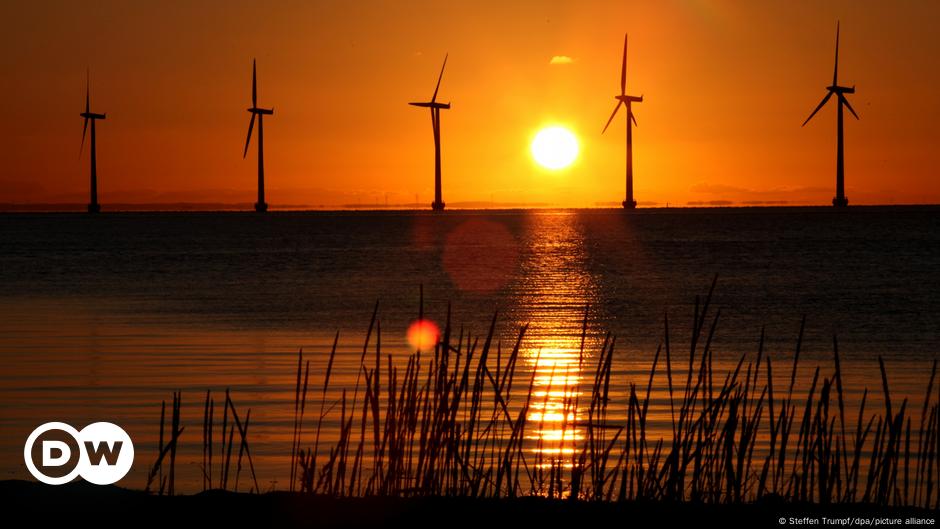
Record renewable energy growth is driving climate progress in some countries, but Germany and many major emitters are falling behind.
Germany has slipped down the climate action ranking for the third consecutive year, with the former green leader now being outperformed by Brazil, Columbia and Romania.
In its worst performance since 2019, the country fell to place 25 and received a "medium" rating overall on the yearly Climate Change Performance Index (CCPI), which assesses efforts to curb global warming in 64 countries plus the European Union.
Still, "a number of countries have been making good progress for years," said Jan Burck, CCPI lead author in a statement. Denmark is leading the way across all four categories assessed — energy use, greenhouse gas emissions, renewable energy and national climate policy. A total of 15 states, including Lithuania, Chile, and Morocco, received an overall "high" rating, which is two more than last year.
The European Union also moved up a spot, while Hungary jumped 21 places after the defeat of former prime minister Viktor Orban's government, which had repeatedly vetoed EU climate plans, dismissing them as a "utopian fantasy."
The top three positions on the CCPI remained vacant again this year, as no country has yet done enough to meet global climate goals aimed at preventing worsening weather extremes and climate damage.
"We are seeing a striking contrast," said Burck. "Progress on climate action is often slow and in some countries, such as the United States, things are even moving backwards. But technologically and economically there is enormous momentum."
That momentum is apparent in record solar energy growth. Last year 75% of global electricity demand growth was met by the green energy source, according to energy think tank Ember's latest global electricity review. Investment in clean energy has also outpaced that in fossil fuels for multiple years.
The rapid expansion of renewable technology, as well as the Iran War and a reduction in deforestation are behind a projected slight fall in emissions for the first time since the COVID-19 pandemic, according to the CCPI.
"Governments have to act now to turn the momentum into sustained emissions reductions," said CCPI co-author Niklas Höhne of the NewClimate Institute, which compiles the report with environmental NGO Germanwatch.
Burck attributed Germany's worst ever performance in the category of national climate policy to current policies being pursued by Germany's economy minister Katherina Reiche.
"Measures that primarily aim to increase the use of natural gas, threaten to undermine progress in the energy transition and risk significantly worsening the conditions for renewable energy and electrification for many years to come," said Burck.
A European Commission report published on November 9 on the sidelines of the UN COP31 climate summit in Turkey said Germany was one of nine EU countries set to miss 2030 emissions reductions targets.
Germany is not alone in its disappointing ranking. The other G20 countries — the world's leading industrialized and emerging economies, responsible for around 80% of global CO2 emissions — also perform poorly.
The only exception among them is the United Kingdom, which ranks seventh and received a high rating, performing well in greenhouse gas emissions, energy use and climate policy. However, study authors rated it low for renewable energy expansion.
The G20's oil- and gas-producing countries occupy some of the lowest positions on the climate action table. Iran, the United States, Russia, Saudi Arabia, the United Arab Emirates and Canada all languish at the bottom of the league, with an overall rating of "very low."
The hosts of this year's COP31, also received a "low" overall score. Australia, a major coal exporter with some of the world's highest per-capita emissions, ranks 54th, while Turkey, which is also heavily dependent on fossil fuels, comes in at 53rd.
China is the world's largest emitter of greenhouse gases and ranks 56th in the CCPI, receiving an overall rating of "very low." Its main weaknesses include its now high per-capita emissions and substantial energy consumption.
However, among the G20, China leads the way in renewable energy expansion. The country, which is five years ahead of schedule in reaching its goal of adding 1,200 GW of wind and solar capacity to the grid by 2030, also produces over 80% of the world's solar panels.
Several oil-producing countries, including Kazakhstan, Saudi Arabia, Uzbekistan and the United Arab Emirates, are also performing better than expected in the renewables category and "are significantly expanding their previously limited" capacity, said the report.
The authors said these countries have significant potential to further expand renewables.
"In the Arab states in particular, very high per-capita emissions and an above-average level of electrification coincide with a relatively low existing share of renewable energy and enormous solar potential," said co-author Natalie Pelekh in a statement. "These are, in fact, ideal conditions for more ambitious climate action."
- germany
- climate
- protection
- country
- gain
- energy
- growth
- progress