Prof. Bokpin urges gov’t to increase infrastructure spending to drive economic growth
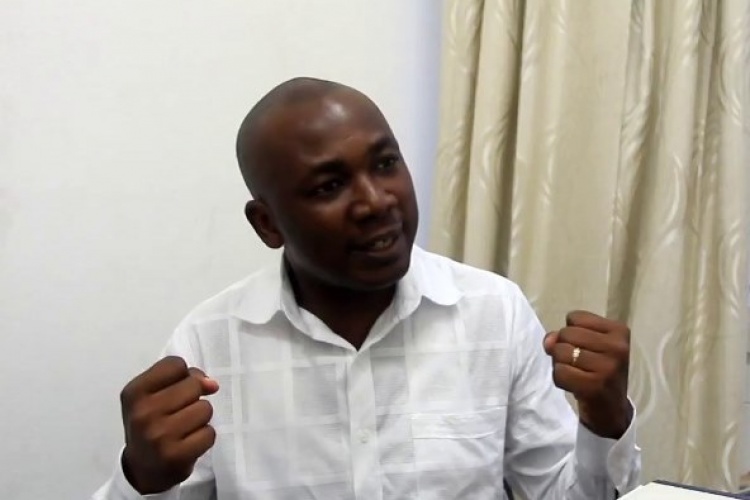
A Professor of Finance and Economics at the University of Ghana Business School, Prof. Godfred Bokpin, has urged the government to reconsider its fiscal framework and increase investment in infrastructure, saying that inadequate public spending could undermine its ambition to achieve private sector-led economic growth. Prof. Bokpin also referred to data from the Ghana Statistical Service’s monthly GDP updates, which he said showed that nearly 70 per cent of the goods and services recorded came from the services sector, largely driven by information and communications technology (ICT).
A Professor of Finance and Economics at the University of Ghana Business School, Prof. Godfred Bokpin, has urged the government to reconsider its fiscal framework and increase investment in infrastructure, saying that inadequate public spending could undermine its ambition to achieve private sector-led economic growth.
He said although the government's efforts to control expenditure and improve value for money were necessary, the scale of Ghana's infrastructure deficit required a stronger public investment drive to create the conditions for businesses to thrive.
Speaking on Joy FM's Super Morning Show on Friday, November 13, during a discussion on the review of the 2027 Budget, Prof. Bokpin said the government's current fiscal strategy needed to reflect the country's development needs.
“I am happy to urge the government to take another look at the fiscal framework and the fiscal strategy because now that we have a commitment to a higher value-for-money drive and the rest of that, we need to scale up the level of infrastructure spending from the government,” he said.
“Without that, it is going to make private sector-led economic development literally impossible to achieve.”
Prof. Bokpin questioned whether the resources allocated to the government's key economic programmes were sufficient to bring about the structural transformation Ghana needed.
He pointed to the government's proposed investment of $10 billion across seven or eight pillars of the new economy over four years, arguing that the amount, when spread across the various sectors and the implementation period, would not be enough to deliver meaningful change.
“If you pick the new economy's seven pillars or eight over four years, the amount of money made available is $10 billion. If you divide that and see what is going into each pillar, you will realise that how much we are investing in each sector is not transformative,” he said.
While acknowledging concerns about wasteful public expenditure, the economist said the government must distinguish between unproductive spending and the infrastructure investment needed to support long-term economic growth.
He cited expenditure patterns in 2025 and 2026, saying that the returns on public spending should be assessed against the goods and services delivered to the economy.
Prof. Bokpin also referred to data from the Ghana Statistical Service's monthly GDP updates, which he said showed that nearly 70 per cent of the goods and services recorded came from the services sector, largely driven by information and communications technology (ICT).
In his view, the figures raised questions about the extent to which government investment was contributing to growth and whether sufficient resources were being directed towards infrastructure to support other productive sectors.
He said that the absence of adequate public investment could make it difficult to achieve economic growth that benefits different sectors and parts of the country.
“The level of investment that government needs to stimulate growth and make growth structurally and spatially inclusive is literally absent,” he said.
The professor also questioned the level of funding committed to the government's Big Push infrastructure programme, saying the amount spent so far appeared small compared with Ghana's annual infrastructure requirements.
He indicated that expenditure on the programme in 2025 was less than $1 billion, raising concerns about whether the government was investing enough to address the country's extensive infrastructure needs.
Prof. Bokpin said that Ghana would need to pursue a much higher growth trajectory to meet the expectations and aspirations of its citizens.
He said that the economy should be growing at a rate of at least 14 per cent over the next decade to achieve the level of development Ghanaians desire.
“This is a choice we have to make,” he said, stressing that the country must decide whether its fiscal priorities adequately reflect its development ambitions.
Prof. Bokpin further warned that Ghana's infrastructure deficit was already imposing high costs on economic activity and productivity.
He pointed to persistent traffic congestion on major roads, including the Accra-Kumasi road and the Dodowa-Adenta road, as examples of the challenges facing commuters and businesses.
He said the problem extended beyond major highways to inner-city roads, district-level roads and regional road networks, many of which require significant investment.
For him, the scale of the infrastructure deficit makes it difficult to justify severe restrictions on economic growth in the name of maintaining favourable debt indicators.
He cautioned that although debt sustainability was important, the government should not lose sight of the need to finance critical development projects.
“In that same year, you cannot celebrate an extreme debt-to-GDP ratio. The debt-to-GDP ratio we are looking at is 45 per cent within this space, and this will constrain our ability to respond to our developmental spending,” he said.
- infrastructure
- growth
- bokpin
- government
- spending
- investment
- sector
- ghana