COP31 draft drops fossil fuel language, retains carbon capture as 1.5°C limit comes under threat

A revised draft agreement at COP31 has removed references to fossil fuels, including an earlier proposal for countries to accelerate the transition away from coal, oil and gas, drawing criticism over the direction of negotiations at the United Nations climate summit in Antalya, Türkiye. COP31 presidents defend the draft Australia’s Climate and Energy Minister and president of the negotiations, Chris Bowen, defended the revised text, saying it reflected consultations with participating countries.
A revised draft agreement at COP31 has removed references to fossil fuels, including an earlier proposal for countries to accelerate the transition away from coal, oil and gas, drawing criticism over the direction of negotiations at the United Nations climate summit in Antalya, Türkiye.
The new text, released on Thursday, November 19, has significantly reduced the issues under discussion, from more than 140 in the version circulated on Monday to 79 in the revised document.
However, the reduction has come with significant changes to the language on fossil fuels.
While the earlier proposal called for an accelerated transition away from fossil fuels, the Thursday version replaces that commitment with a broader pledge towards an "irreversible global transition" to low greenhouse gas emissions and climate resilience.
The revised document makes no explicit reference to fossil fuels, although it retains provisions supporting the development and expansion of carbon capture, utilisation and storage (CCUS) technologies.
The changes have raised concerns about whether countries will agree on a clear commitment to reduce dependence on coal, oil and gas, which are major sources of greenhouse gas emissions.
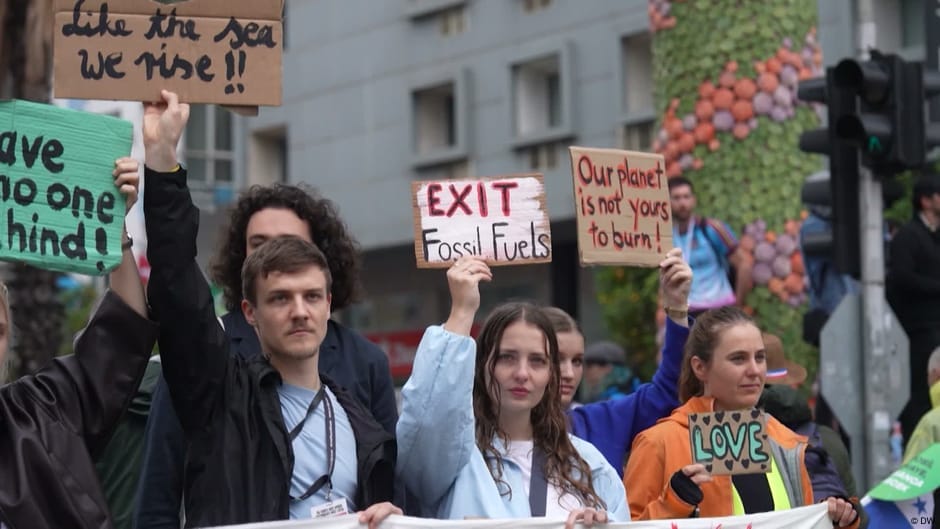
The changes have drawn criticism from campaigners, who have urged developing countries to reject the revised proposals and continue pushing for stronger commitments.
Andreas Sieber of the campaign group 350.org accused the COP31 presidencies of failing to provide the leadership needed to address climate change.
"We are on the brink of an outrageous and utterly embarrassing lack of leadership by the COP31 presidencies," he said.
"They have reduced one of the defining challenges of our time to an inconvenient paragraph they would rather delete."
He also criticised wealthy countries over their climate finance commitments, arguing that developing countries were being expected to bear the cost of the global transition without receiving the necessary financial support.
"Rich countries' failure on finance is a historic disgrace. They expect developing countries to shoulder the cost of a global transition while refusing to provide the means to deliver it. This is not a failure of technical negotiations. It is a shameless abdication of political responsibility," he said.
Australia's Climate and Energy Minister and president of the negotiations, Chris Bowen, defended the revised text, saying it reflected consultations with participating countries.
He said the presidencies had presented what they believed offered the best opportunity to reach an ambitious agreement acceptable to all countries.
"We have put forward what we think, based on all our consultations, gives us the best chance of the most ambitious results that consensus will allow," he said.
His Turkish counterpart and COP31 President, Murat Kurum, also defended the negotiations, describing the discussions among countries as showing "great enthusiasm".
He said the latest draft demonstrated a "strong commitment to the Paris agreement".
On the removal of references to fossil fuels, Mr Kurum argued that the issue had already been addressed at previous climate conferences.
"I don't think there's any backsliding," he said.
However, the absence of explicit fossil fuel language in the latest draft has kept attention on whether countries will agree to a clear commitment to reduce their reliance on the fuels.
While references to fossil fuels have disappeared, the revised document retains provisions for carbon capture, utilisation and storage (CCUS).
Paragraph 34 welcomes efforts to rapidly expand the development and deployment of the technologies.
Paragraph 36 also proposes accelerating CCUS deployment, with an indicative ambition of working towards capturing between 1.3 and 2.5 billion tonnes of carbon dioxide annually by 2035. The proposed figures remain in brackets, meaning they are still under negotiation.
The draft recognises the role of carbon dioxide removal in achieving long-term climate goals but says it should complement, rather than replace or delay, deep emissions reductions.
It also calls for an irreversible global transition towards low greenhouse gas emissions, supported by renewable energy, energy efficiency and other low-carbon technologies.
Another proposal to increase electricity's share of global final energy consumption to 35 per cent by 2035 appears among a wider set of possible actions in the draft.
The disagreements come as the world faces growing concern over the 1.5°C temperature limit established under the Paris Agreement.
The COP31 draft explicitly acknowledges that global peak warming is projected to exceed 1.5°C above pre-industrial levels.
In paragraph 9, the document expresses deep concern about the projection. It warns in paragraph 11 that every additional increment of warming will increase the frequency and intensity of loss and damage, with increasingly harmful and, in some cases, irreversible consequences for people and natural systems.
The draft nevertheless reaffirms countries' commitment to pursue efforts to limit warming to 1.5°C, reduce the magnitude and duration of any temperature overshoot and achieve deep, rapid and sustained emissions reductions.
The acknowledgement of the projected overshoot adds pressure on countries to agree on stronger action to reduce greenhouse gas emissions.
However, climate finance has also emerged as a major point of disagreement. A separate negotiating track on climate finance produced a largely empty document on Thursday, reflecting the lack of progress among countries on delivering the US$300 billion a year that developed countries have pledged to developing countries by 2035.
The disagreement has raised further concerns about how developing countries will finance the transition to cleaner energy and respond to the effects of climate change.
Mr Sieber said wealthy countries were expecting developing nations to take on the cost of the transition without providing the financial support needed to achieve it.
The finance disagreement also comes as developing countries continue to call for more predictable and accessible funding to address their climate needs.
The debate over fossil fuels has also drawn attention to a separate development involving China, the United States and Russia.
At a leaders' summit in Shenzhen, the three countries' leaders, Xi Jinping, Donald Trump and Vladimir Putin, pledged to "increase the production and supply of refined petroleum products for the benefit of all nations".
Tlou Ramaru of the African Group of Negotiators described the development as "hypocrisy".
The development has added another dimension to the debate over the world's commitment to reducing dependence on fossil fuels.
Following the release of the revised texts, the Australian and Turkish COP31 presidencies began meetings with the main negotiating groups and individual countries on Thursday.
The discussions were scheduled to continue through the night and possibly into Friday morning as countries worked to resolve outstanding disagreements.
The two-week climate conference is scheduled to end at 6pm on Friday in Türkiye, although previous UN climate conferences have extended beyond their planned closing times.
The final agreement will depend on whether countries can reach consensus on the outstanding issues, including fossil fuels, climate finance and the level of ambition needed to address global warming.
- fuel
- draft
- country
- carbon
- capture
- language
- climate
- commitment