African ministers warn against empty promises at COP31, demand delivery of climate finance

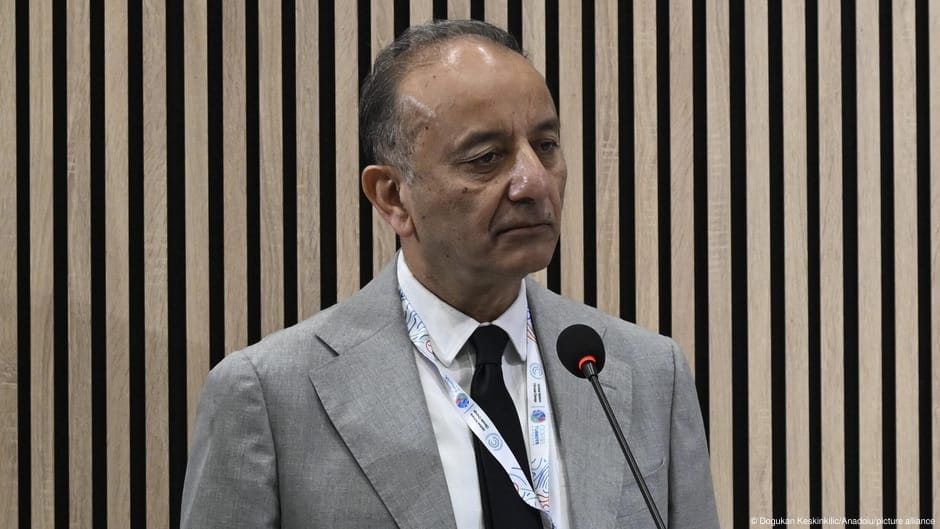
At a press conference in Antalya, Türkiye, on the final day of the UN Climate Change Conference (COP31), ministers from Ghana, Kenya, Zambia, Senegal and Sierra Leone said Africa would not accept another climate outcome built on declarations without adequate financial support. Representing 54 African countries, Ghana’s Minister of Environment, Science and Technology, Dr. Zanetor Agyeman-Rawlings, said the continent had come to the negotiations to demand what was rightfully due to its people, rather than appeal for assistance.
African ministers have mounted a united call for developed countries to honour their climate finance commitments, warning that failure to deliver promised resources will undermine the implementation of the Paris Agreement and deepen the vulnerability of millions of people across the continent.
At a press conference in Antalya, Türkiye, on the final day of the UN Climate Change Conference (COP31), ministers from Ghana, Kenya, Zambia, Senegal and Sierra Leone said Africa would not accept another climate outcome built on declarations without adequate financial support.
Representing 54 African countries, Ghana's Minister of Environment, Science and Technology, Dr. Zanetor Agyeman-Rawlings, said the continent had come to the negotiations to demand what was rightfully due to its people, rather than appeal for assistance.
She accused developed countries of creating barriers to accessing climate finance through increasingly restrictive conditions, shifting goalposts and delays in delivering promised resources.
"We're here on behalf of over a billion people who are supposed to be the custodians of this framework, but it seems we've been excluded, not through technicalities, but through inaccessible finance, the use of shifting goalposts and non-delivery of promises," she said.
The ministers insisted that the final COP31 outcome must prioritise adaptation finance, operationalise commitments to triple adaptation funding and establish clear mechanisms for tracking financial delivery.
Africa had arrived at COP31 seeking a credible pathway towards tripling adaptation finance, but the proposal was initially left out of the official agenda.
The ministers said African negotiators had nevertheless sustained pressure across the various negotiation tracks to secure progress on the issue.They cited the significant gap between available adaptation resources and the financial requirements of developing countries, with estimates of adaptation finance needs reaching approximately US$35 billion annually by 2050.
The African position is also pushing for at least US$120 billion annually by 2035 as an initial benchmark in advancing the tripling of adaptation finance.
However, the ministers warned that financial targets without clear implementation arrangements, timelines and accountability mechanisms would do little to address the continent's growing climate vulnerabilities.
They are therefore demanding an agreed baseline, measurable milestones, public tracking and a clear delivery plan to ensure that commitments translate into accessible and predictable funding.
These are lives lost, and livelihoods destroyed
Dr. Zanetor Agyeman-Rawlings said Africa's position was rooted in the lived experiences of communities already suffering the consequences of climate change.
She argued that the Paris Agreement represented a collective commitment to pursue a different development pathway, with developed countries expected to support developing economies in adapting to climate impacts and transitioning towards sustainable development.
However, she expressed concern that some developed countries appeared unwilling to honour their financial obligations.
"We cannot keep changing the agreement to fit what developed countries want. Then there is no purpose in having an agreement if we keep shifting the goalposts," she said.
She called for a strong signal from developed countries that existing commitments would be respected, insisting that African countries had also demonstrated commitment to the global climate framework.
Kenya’s Cabinet Secretary for Environment, Climate Change and Forestry, Dr. Deborah Mlongo Barasa, highlighted the devastating consequences of climate change across African communities, including food and water insecurity, declining agricultural production, livestock losses and humanitarian emergencies.
She cited the experiences of farmers recording reduced harvests, pastoralists losing livestock and communities whose health and education facilities have been disrupted by flooding.
In some affected areas, submerged schools have prevented children from accessing education, while health facilities face challenges delivering essential services, including immunisation.
She said adaptation, loss and damage financing were critical to ensuring that affected communities received the resources needed to recover and build resilience.
The minister also highlighted Africa's energy access challenge, noting that more than 600 million people on the continent still lack access to electricity.
She argued that the global energy transition must therefore be supported with adequate resources to expand access while enabling countries to pursue sustainable development.
Minister of Green Economy and Environment in Zambia, Gilbert Siame, also called for a just transition framework that recognises Africa's development priorities and ensures that the continent benefits from the global shift towards cleaner energy.
He stressed that Africa must not be burdened with transition requirements that undermine employment, economic growth and the development of its natural resources.
The continent is particularly concerned about ensuring fair terms for the extraction and processing of critical minerals needed for the global energy transition.
The ministers want African countries to move beyond supplying raw materials to the global market and develop the capacity to process and utilise these resources locally.
They said a credible transition must protect workers and communities, create economic opportunities and be supported by adequate finance, technology transfer and capacity building.
They also called on the COP31 Presidency and negotiating parties to ensure that political cover decisions do not replace concrete agreements emerging from the formal negotiation tracks.
Africa wants adaptation finance and the climate finance work programme to remain central to the final outcome, with measurable and time-bound commitments.
The ministers said the continent remained ready to work constructively with the COP Presidency and other parties towards an ambitious and credible agreement.
However, they warned that the failure to honour existing commitments would further erode trust in the multilateral climate process.
For Africa, they said, the test of COP31 is not simply the declarations adopted at the conference, but whether the commitments translate into resources that protect lives, sustain livelihoods and support the continent's development.
- climate
- finance
- country
- delivery
- minister
- commitment
- adaptation
- agreement