business

NRS seeks simpler tax rules for creative sector

NRS seeks simpler tax rules for creative sector

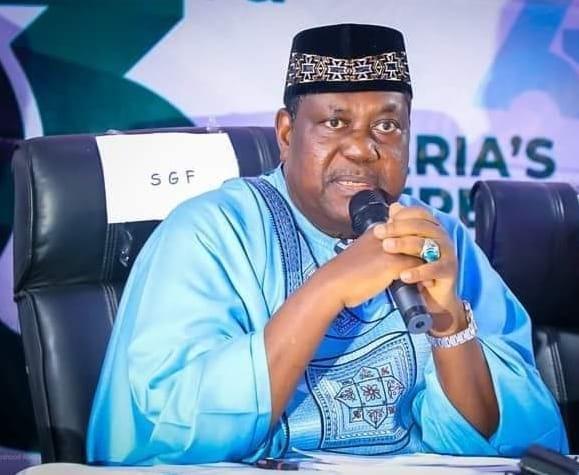
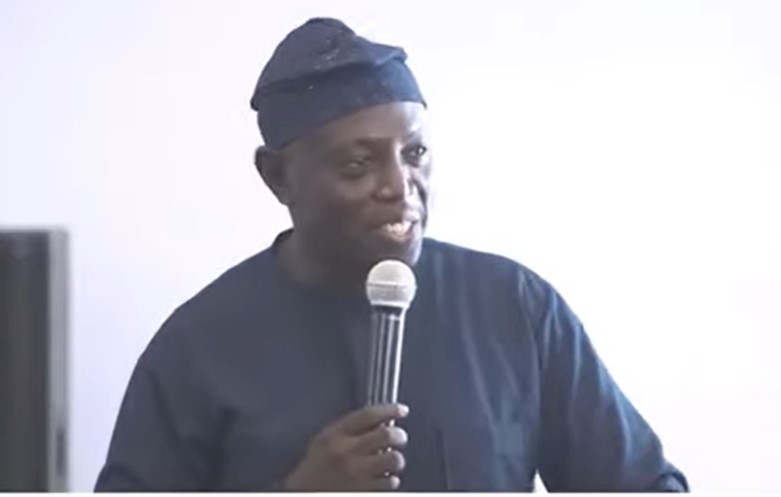
By Godwin Oritse The Nigeria Revenue Service (NRS) has called for simpler, clearer and business-friendly tax rules to unlock investment opportunities in Nigeria’s creative economy, stressing the need for a tax system that supports innovation, enterprise growth and wealth creation. Speaking at the just concluded high-level dialogue on taxation and investment in the creative economy during the Creative Africa Nexus (CANEX) event in Lagos, Executive Chairman of the NRS, Dr. Zacch Adedeji, described the creative economy as one of Nigeria’s most promising economic assets, noting that it had…

By Godwin Oritse The Nigeria Revenue Service (NRS) has called for simpler, clearer and business-friendly tax rules to unlock investment opportunities in Nigeria’s creative economy, stressing the need for a tax system that supports innovation, enterprise growth and wealth creation. The Service noted that the emergence of digital business models, intellectual property-driven enterprises and cross-border transactions required regulations that creators, entrepreneurs and investors could easily understand and navigate.

Speaking at the just concluded high-level dialogue on taxation and investment in the creative economy during the Creative Africa Nexus (CANEX) event in Lagos, Executive Chairman of the NRS, Dr. Zacch Adedeji, described the creative economy as one of Nigeria’s most promising economic assets, noting that it had evolved beyond entertainment into a major source of employment, foreign exchange earnings, investment and economic opportunities.

Adedeji who was represented by the Executive Director, People, Stakeholders and Communication, Mr. Obinna Ihedioha, also said that digital platforms had transformed how creative value was produced and commercialised, with entrepreneurs building businesses around copyrights, designs, brands and digital products. He reiterated that tax administration must evolve to accommodate these developments without discouraging innovation or business expansion.

“The government needs sustainable revenue to invest in education, security, technology and infrastructure. But how we tax matters as much as what we collect. It shapes whether businesses start, whether investors come, and whether enterprises grow or stay small,” he said. Adedeji added that the new tax laws offered an opportunity to establish a more efficient system through clearer regulations, reduced compliance burdens for small businesses and improved taxpayer support.

He identified clarity, understanding and value as essential to effective taxation, stressing that formalisation should provide creative businesses with tangible benefits, including access to finance, contracts, investment, wider markets and legal protection. The NRS, he said, participated in CANEX through a high-level dialogue, an Investment and Tax Advisory Hub for creators and investors, and the Creative Economy Tax and Investment Initiative (CETII), designed to sustain engagement beyond the event.

  • tax
  • nrs
  • business
  • investment
  • economy
  • creative
  • nigeria
  • opportunity

Summaries and tags are generated automatically. Stay informed with VidiaNews.

Related news

Ghana’s 2027 budget: A New economic direction and what it means for the energy sector
business

Ghana’s 2027 budget: A New economic direction and what it means for the energy sector

Ghana’s 2027 Budget Statement, presented by Finance Minister Dr Cassiel Ato Forson under the theme “The New Economy: New Ghana, Jobs and Prosperity,” represents an important shift in the country’s economic policy direction. A New Opportunity for Energy Security and Industrial Competitiveness The Budget acknowledges the structural challenges confronting Ghana’s electricity sector, including high tariffs, distribution losses, weak revenue collection, fuel supply risks and accumulated financial obligations.

Read →
FG targets stronger local capacity for energy security
business

FG targets stronger local capacity for energy security

By Daniel Abia PORT HARCOURT — The Federal Government has expressed its readiness to strengthen local industrial capacity, infrastructure and investment as part of efforts to achieve energy security and accelerate Nigeria’s economic transformation. Akume spoke in Port Harcourt at the 10th Africa Energy Summit, organised by the Solewant Energy Training Institute, a subsidiary of Solewant Group, with the theme, “Scaling Innovative Industrial Capacity for Africa’s Energy Security.”

Read →
‘What has changed in the pockets of Ghanaians?’ – Afenyo-Markin challenges government
business

‘What has changed in the pockets of Ghanaians?’ – Afenyo-Markin challenges government

Minority Leader Alexander Afenyo-Markin has questioned the impact of the government’s reported economic gains on ordinary Ghanaians, arguing that official statistics do not reflect the financial realities facing households and businesses. Contributing to the closing debate on the 2027 Budget Statement in Parliament on Thursday, November 26, 2026, Afenyo-Markin said the two economies were increasingly disconnected.

Read →
Rewane projects 4.5% growth, urges investors to rethink strategies
business

Rewane projects 4.5% growth, urges investors to rethink strategies

By Onome Onyeme The Chief Executive Officer of Financial Derivatives Company, Bismarck Rewane, has projected Nigeria’s economic growth at between 4.3 and 4.5 per cent in 2027, urging investors to rethink traditional investment strategies and embrace emerging opportunities. He also projected the Naira to trade between N1,500 and N1,600 per dollar in 2027, while anticipating an end to global interest rate increases.

Read →
2027 Budget borrowing will push up rates and starve businesses – Prof Isaac Boadi warns
business

2027 Budget borrowing will push up rates and starve businesses – Prof Isaac Boadi warns

By Myjoyonline.com The 2027 budget will make government the biggest obstacle to cheaper credit for Ghanaian businesses, the President of Africa Policy Lens (APL), Prof. Isaac Boadi, has warned. In a critique of the Budget, Prof. Boadi says the financing plan behind the government’s New Economy programme works directly against its own promise to deliver cheaper loans to farmers, manufacturers and exporters.

Read →