Germany news: 'We can no longer afford everything,' Merz says
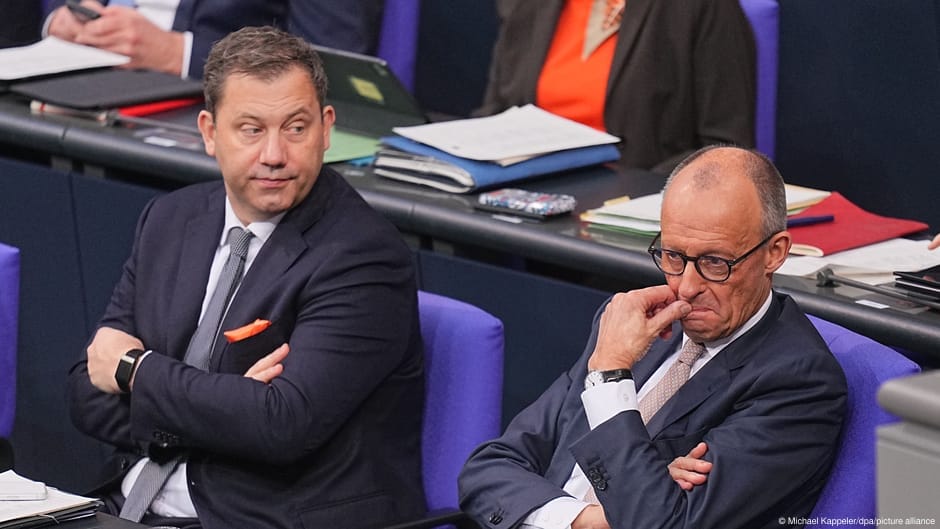
The German chancellor has warned tax revenue means a tighter budget for 2027 and beyond. Meanwhile, President Steinmeier is in Kenya for the final leg of his Africa tour.
Keep reading for the latest news and analysis from Germany on Wednesday, November 25:
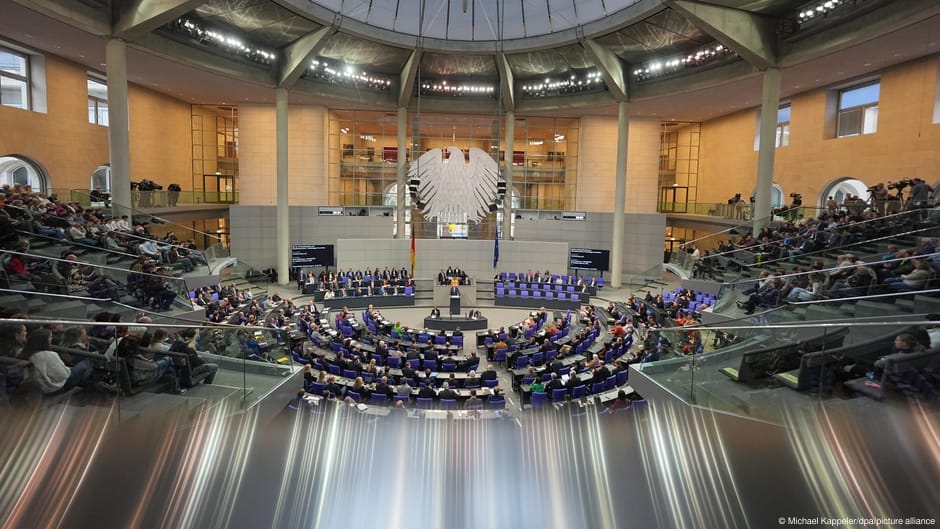
Chancellor Friedrich Merz has spoken in the Bundestag as the debate opens on the government's budget plans for 2027.
"We no longer have the money for everything," Merz said in his remarks to the German parliament.
He described the tight budget, which has to be finalized this week, as an "accurate reflection" of the "difficult situation as a country — geopolitically, technologically, and demographically" that Germany finds itself in.
"We will no longer be able to afford everything with tax revenue that we have become all too accustomed to for far too long," Merz added.
The government has €560.9 billion (around $614 billion) to spend in its core budget for 2027, but both Merz's conservative CDU/CSU and the Social Democrats, who make up the coalition government, have stressed that the budget for 2028 will be even more challenging.
The extra borrowing for defense and infrastructure, that marked a break with years of debt avoidance, "is limiting our room to maneuver in the coming years to an extent that many have not yet truly come to terms with," Merz warned.
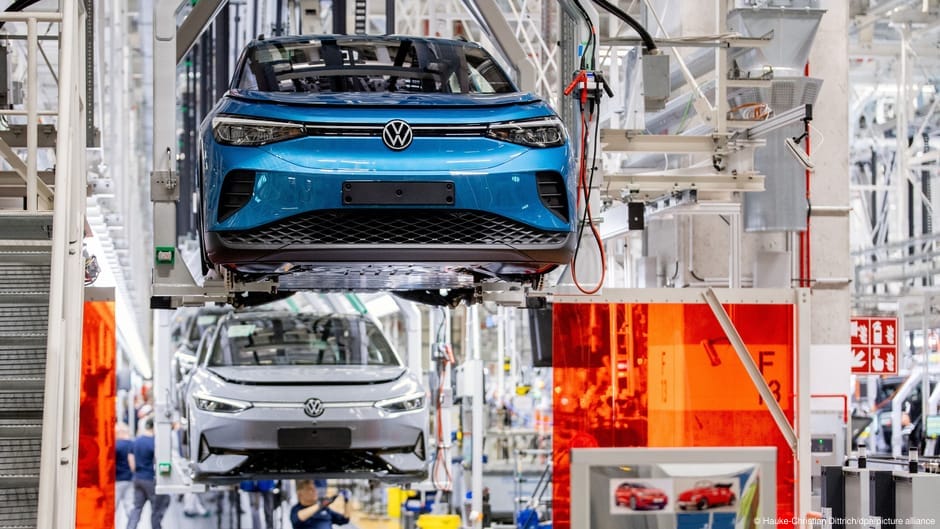
German GDP only grew by 0.1% between July and September, according to updated data from the Federal Statistics Offices (Destatis).
This marked a downwards revision from the 0.2% that had previously been estimated.
"After Germany's economic performance was robust in the first six months of the year in the face of geopolitical crises, economic growth slowed in the third quarter," statistics chief Ruth Brand said .
Despite a surprisingly good performance in the first half of the year, a slump in exports, as well as summer heatwaves and record-low water levels in rivers that hindered transportation of goods along Germany's key waterways, brought a slowdown to Europe's biggest economy.
Nevertheless, overall growth for the year is expected to reach its highest level since 2022 thanks to increased public spending on defense and infrastructure.
The former head of Israel's spy agency Mossad, David Barnea, is scheduled to take part in a breakfast meeting with members of the German parliament, the Bundestag, where he will discuss the ongoing war in the Middle East.
By his own admission, Barnea played a role in the pager attack that targeted members of Hezbollah in Lebanon in September 2024. The attack killed at least 37 people and injured some 300 others, including civilians. It has been described as a possible war crime by UN human rights chief Volker Türk.
That's why the human rights organization European Center for Constitutional and Human Rights (ECCHR) has called for Barnea's arrest, saying it filed a complaint with the Federal Prosecutor's Office.
"Germany must not provide a platform for alleged war criminals. Anyone who distributes thousands of everyday objects rigged with explosives and detonates them months later — without knowing where they will be at the time of detonation — knowingly accepts that an uncontrollable number of civilians will be injured or killed," ECCHR's Alexander Schwarz said.
Criticism also came from the Green party, with Bundestag member Kassem Taher Saleh saying Barnea had "no place in the Bundestag," in comments to the taz, due to the allegations against him. However, his Green colleague Konstantin von Notz defended the invitation, pointing to the close cooperation between Mossad and Germany's own intelligence agency.
Neither the Israeli government nor Barnea have commented on the ECCHR complaint.
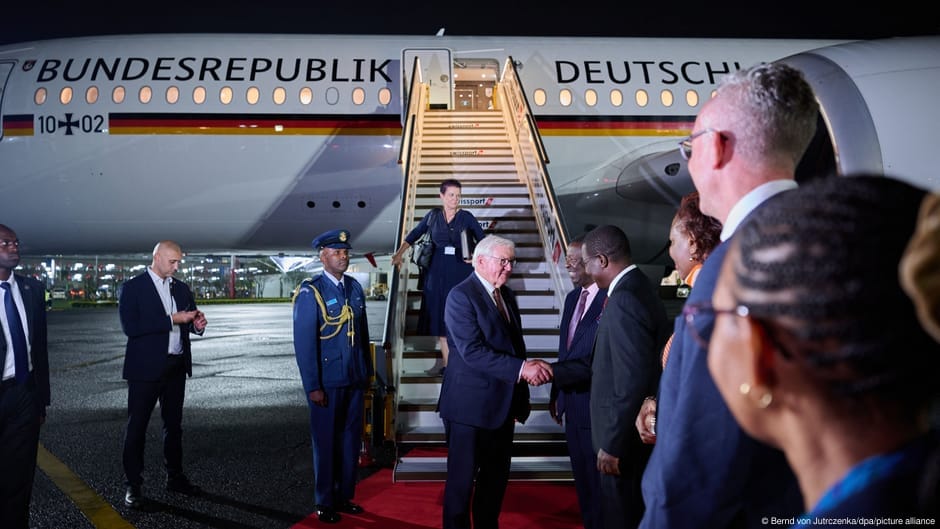
Following stops in the Ivory Coast and Ghana, German President Frank-Walter Steinmeier has arrived in Kenya for the final leg of his Africa tour.
He is set to meet with Kenyan President William Ruto to discuss bilateral relations, including economic cooperation. Kenya is one of Germany's main partners on the African continent. Following Kenya's independence from Britain in 1963, Germany was the first country to officially recognize it.
During his stay in the Ghanaian capital Accra, where he took part in the opening of the German-African Business Summit, Steinmeier called on German companies to engage more deeply in African countries.
In Kenya, the German president is set to visit the special economic zone of Tatu City, where a special tax priveleges are attracting businesses.
Steinmeier last visited Kenya in 2020, but this trip is likely to be his last, with his term ending in March 2027.
Good morning from chilly Bonn, where the cold weather has yet to bring any snow.
We will continue to bring you the latest from President Steinmeier's tour of Africa which will continue on Thursday in Kenya for the final leg.
We will also be following news out of Berlin where a plaque is set to be unveiled in memory of Holocaust survivor Margot Friedländer and where, separately, protests are planned against the arrival of former Mossad chief David Bernea.
- germany
- news
- merz
- chancellor
- tax
- revenue
- budget
- president