€561 Billion and Still Not Enough: Germany's 2027 Budget Exposes a Coalition on the Brink
The budget for 2027 has reached new highs, and pension funds, defense spending, and a weak economy are increasing the pressure. At the same time, tensions are mounting within the government.
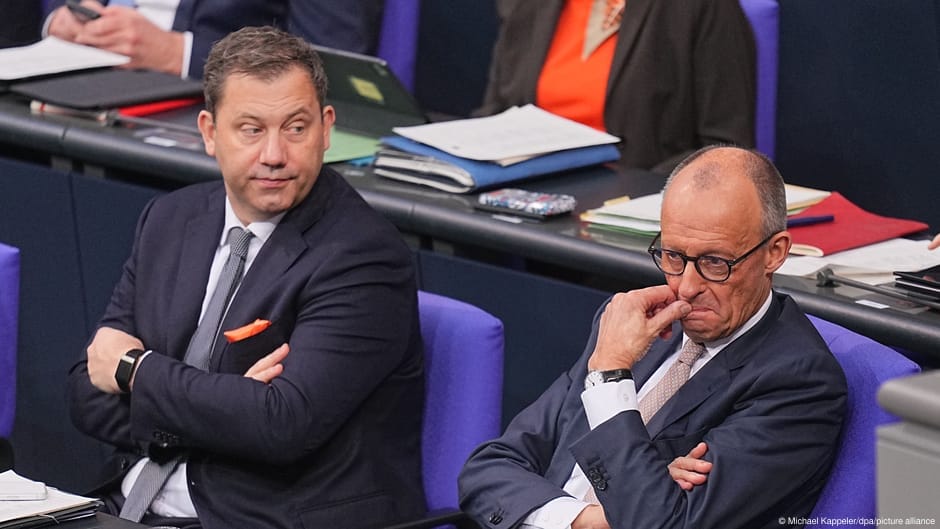
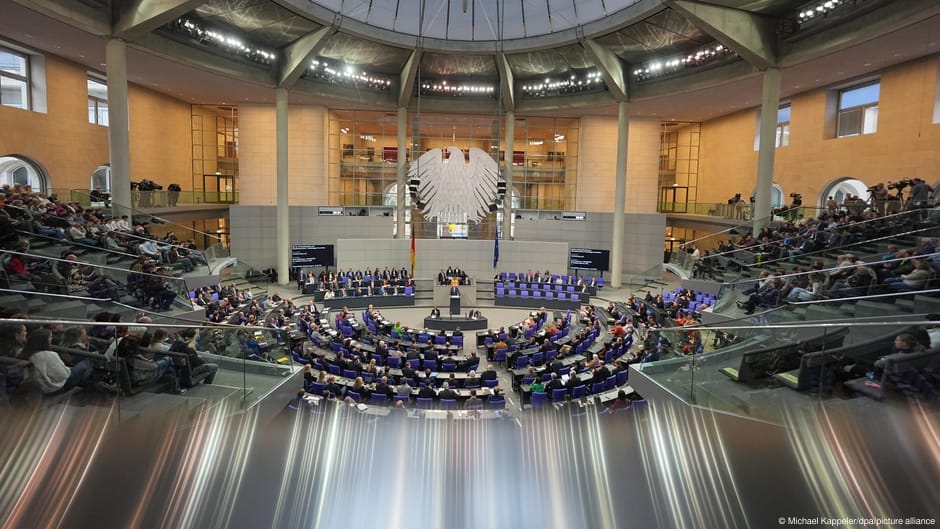
At first glance, everything seems to be business as usual. Lawmakers in the Bundestag, the lower house of parliament, are holding four days of final debates on how much money the federal government may spend in the coming year and on what. These follow a familiar pattern: The government pats itself on the back, while the opposition voices criticism. But anyone listening more closely will notice that there are doubts even in the ranks of the coalition parties, the conservative Christian Democratic Union (CDU), their Bavarian allies, the Christian Social Union (CSU), and the center-left Social Democratic Party (SPD).
"As a country, we are in a difficult situation geopolitically, technologically, and demographically, and next year's budget is an accurate reflection of that," Chancellor Friedrich Merz (CDU) acknowledged on Wednesday in the Bundestag.
"If we don't change course, in a few years we'll find ourselves in a situation where all federal revenue will have to be spent on social programs, interest payments, and defense," he reflected on Wednesday during a four-hour debate focused on government policy as a whole, rather than the individual budgets of the ministries.
This government has now been in office for about 20 months. Back in early 2025, expectations were enormous. Merz had promised to bring the budget back in line with the debt brake enshrined in the constitution, which stipulates that the government can spend only as much as it collects.
Yet for 2027, spending — at just under €561 billion ($614 billion) — will be higher than ever before, and tax revenues are nowhere near sufficient to cover this, meaning Germany is looking at a record debt totaling €210 billion.
The largest opposition party, the far-right Alternative for Germany (AfD) calculated that the government will incur €401,000 in new debt every minute next year. In the Bundestag, AfD co-leader Tino Chrupalla called it a "debt orgy" that will paralyze the country. Merz will "go down in history as the chancellor who led Germany to bankruptcy," he exclaimed.
Germany's debt has only ever been higher in the COVID-19 pandemic. The current pressures are obvious: The economy is struggling, the population aging, and Russia's war against Ukraine is about to enter its sixth year.
The defense budget is now by far the highest in the history of the Federal Republic, with €109 billion allocated for 2027, an increase of €27 billion on last year. Added to this is the multi-year, debt-financed special military fund, intended to modernize the armed forces, bringing the total defense budget to €139 billion.
The AfD and the socialist Left Party have sharply criticized this. Left Party parliamentary leader Heidi Reichinnek accused the government of pursuing "militarization and boundless rearmament on the one hand, and brutal social cuts and an orgy of budget cuts on the other."
The AfD's Chrupalla said that the temporary reduction in the electricity tax, pushed through at the last minute, would save the average family a mere €100 a year, while Ukrainian President Volodymyr Zelenskyy "walks out of the chancellery here in Berlin with a check for €200 million after just one afternoon." "Whose chancellor are you, Mr. Merz?" he asked.
The opposition Greens did not agree. While they also criticized the budget as "unserious," Green Party Bundestag member Britta Haßelmann described the AfD's stance on Ukraine as shameful. She rejected the idea that money was being wasted on Ukraine, saying that supporting Ukraine bolstered security for Germany and Europe.
The chancellor shares this view. "You can't say it often enough, either to the far right or the far left: Russia knows exactly what it wants. And Russia wants more than just Ukraine," Merz said. Russia is escalating tensions in the Baltic region, in Poland, in the Black Sea, and in space. Moscow is also seeking escalation in Germany, even at the cost of lives. "That is why we must show Russia its limits," he said.
But it is becoming increasingly difficult for the government to justify the high spending on Ukraine. Germany's pension and health care costs are only getting bigger: By far the largest single budget item is that of the Ministry of Labor and Social Affairs, which is growing to over €200 billion, even with cuts to unemployment benefits.
Work is currently underway on a reform of the pension system — something that many see as urgent, as the workforce born in the 1960s, when more than a million children were born in Germany every year, is on brink of retiring. Birth rates nearly halved by the mid-1970s and declined even further afterward. For now, so-called "boomers" still make up one-third of the current workforce — but soon they will be drawing pensions.
Even now, Germany's pensions cannot be financed solely with contributions on wages and salaries. In 2025, just over €420 billion in pensions were paid out, with the government contributing €127 billion of that amount. By 2027, the government aims to save €3 billion on this figure, which is likely to further increase pension contributions.
The coalition parties are stuck in a row over how to reform the pension system. Chancellor Merz insisted in the Bundestag that the coalition was solving the country's fundamental problems, but he warned that in future, tax revenues "will no longer be enough to afford everything we have become all too accustomed to," he said. "All of us here will have to give up some of the ideas we cherish."
The SPD, on the other hand, is counting on increasing federal revenue. SPD parliamentary leader Matthias Miersch emphasized in the Bundestag that large fortunes and inheritances must contribute more to "public costs."
That, he said, must also apply to large companies. Currently, heirs to family-owned businesses often pay significantly less in taxes than heirs to real estate or financial assets, because they can be exempted from inheritance tax if they continue to run the business. This is intended to protect them from having to pay taxes in the event of a breakup or sale of the company.
According to Miersch, the government must now think about taxing the wealthy more. "For us, this issue is by no means off the table; on the contrary, we are putting it on the agenda," he said. The government's revenue situation is "an issue we need to discuss."
All in all, the outlook for 2027 is strained — and not just financially. The political differences between the CDU/CSU and the SPD are likely to make working together even more difficult. Conflict is inevitable, especially with several state elections scheduled for the spring.
The chancellor knows this and tried to appear confident that better collaboration was possible: "We must seek compromise in our joint decision-making, represented by these — admittedly quite different — coalition partners," he said.
- budget
- coalition
- brink
- germany
- high
- pension
- fund
- defense