The perfect storm behind Congo’s deadliest Ebola outbreak

Patients and health workers pay a staggering cost as war and a failing health system collide with a deadly virus.
On July 21, 2026, Emily Vandamme, a doctor with Medecins Sans Frontieres (MSF), was getting ready to enter the suspect ward, the small building that houses patients with suspected Ebola who are awaiting their test results. It was the second week of the Belgian physician’s month-long field mission with the Elikya Ebola treatment centre in Bunia, the largest city of the Ituri province in the eastern Democratic Republic of Congo.
Because all possible Ebola cases go through this process, the small building often holds some of the most critically ill patients in the entire facility. The exhausted night team had just been forced to leave the ward after more than an hour inside. Their masks were soaked with sweat, and their goggles were so fogged that they could not safely care for patients.
Vandamme knew a woman inside who had just given birth and was bleeding out fast, but she could not rush into the ward. Entering the red zone, where infectious patients are isolated, requires a meticulous dressing ritual in which safety and focus are paramount. So, despite urgent calls coming from inside the treatment area, Vandamme had to remain completely calm while putting on her protective gear, which resembled a spacesuit. Every layer had to be checked, and she needed to hydrate and be disinfected, a process that takes at least 15 minutes. Rushing leads to mistakes, and around Ebola, a single misstep can be deadly.
When she finally entered along with her Congolese colleague, Daniel Lomonobo Anigiza, she found the woman in shock and covered in blood. Agitated and barely aware of her surroundings, the patient reached for the medical workers, who had to stop her from tearing their suits or pulling off their masks.
“Luckily, I’m quite tall, so she couldn’t reach my face,” Vandamme said.
Another heavily pregnant woman and her 17-month-old son, Bahati Prince, were in good shape but had watched the scene in horror. Next to them were three other patients, all in critical condition owing to a severe drop in blood sugar, a common complication in advanced Ebola cases.
“We were two doctors, facing four emergencies at once,” Emily recalled, speaking anxiously and in great detail, as though reliving every moment. Because there was only room for two people to put on their protective gear in the buffer room, they had to face the mayhem that day, at least initially, on their own.
While Daniel attended to the sugar-deprived patients, Emily tried to stabilise the new mother and insert an intravenous drip. Her newborn daughter was bundled up on a chair in the corner. When reinforcements finally arrived, a midwife and a nurse took over the mother’s care and Emily was able to turn her attention to the baby.
“I was afraid to look, but to my surprise she was warm and pink, doing amazingly well,” she said.
Vandamme cradled the little girl to keep her warm, while trying to arrange an urgent transfer to another hospital, hoping it would give her a fighting chance. There, she might be able to receive an experimental Ebola treatment as part of a clinical trial. At that time, only five babies in similar circumstances were known to have survived Ebola, an MSF gynaecologist had informed her.
Emily urged the team outside the ward to prepare an ambulance.
“Just as I walk back into the room with her newborn baby, the mom passes away,” she said. “Her name was Mave …”
“All we could think was: ‘We’ve lost the mother, but we have to do everything we can to save her baby'. ”
Before they could act, one of the three patients with low blood sugar suddenly collapsed and died. Moments earlier, the young man had been eating and walking around, seemingly revived by a dose of glucose.
Vandamme was still holding the newborn, desperately looking for someone to take her. Fortunately, a home nurse who had already survived Ebola — and was thus largely immune — arrived. The woman often stayed in the clinic to care for the infected children.
By then, Vandamme was covered in blood and was told by the team outside to exit and be disinfected. As she made her way toward the exit, breathing heavily through the saturated mask and barely seeing through her goggles, she noticed the pregnant woman, the mother of Bahati Prince, weeping frantically.
The young man who had just died had collapsed in front of her. Now, out of nowhere, her son's condition had taken a turn for the worse. She was clutching the barely responsive toddler, begging Vandamme to help.
Despite the risk, Vandamme could not bring herself to abandon them. She asked a nurse to disinfect her bloodstained sleeves inside the red zone, then managed to insert an IV with lifesaving glucose and fluids into the boy. Slowly, he began to respond, and Vandamme rushed to the exit.
“Once we were outside, my coworkers and I just stared at each other blankly, trying to grasp what we just had witnessed,” she said.
They were all completely worn out, but the ordeal was far from over.
That same day, Vandamme went back in for two more difficult shifts, checking on Prince whenever she could. The little boy tested positive for Ebola, but surprisingly, his mother was negative. Despite the increased risk of infection amid her advanced pregnancy, she refused to leave her son’s side.
“In the days after, she was a stellar caretaker,” Emily explained. “She guarded his IV like a lioness and constantly tried to get him to eat and drink, although he could barely swallow.”
Gradually, the little boy recovered, and a few days after the crisis, he sat upright. Some food was staying in his tummy, and he even tried to play. When Vandamme saw them through the window, the mother smiled and waved proudly.
Then Prince’s mom had to be transferred to another clinic to give birth. When Vandamme arrived for her morning shift, the doctor she was relieving assured her the boy was still going strong. She was euphoric — finally a glimmer of hope. She headed straight to his room, eager to witness the miracle with her own eyes.
Instead of finding him upright and playing, however, she found Prince in his bed, lifeless and alone. Presumably, he had died from a sudden drop in blood sugar. Whether his mom’s constant care and feeding could have saved him is a question that Vandamme said would haunt her.
“Ebola is horrifically ruthless,” she said softly. “I never asked how his mother’s delivery went. At that moment, ignorance was bliss.”
The story of Bahati Prince lays bare the merciless unpredictability of Ebola. Since his death this summer in the DRC, the epidemic there has continued to spiral out of control.
More than 11,000 infections and 5,300 deaths have been recorded, meaning nearly half of those infected have died. MSF reported on November 12 that nearly two-thirds of reported Ebola-related deaths over the previous month were in communities, not in treatment centres.
That means the surveillance network, supposedly the cornerstone of an Ebola response, is blind to the majority of infections. People are dying in their homes surrounded by their families, seeding the next wave of the virus.
This is the largest and deadliest Ebola outbreak ever to hit Congo and the second worst worldwide. Only the epidemic that swept through West Africa between 2014 and 2016 was more devastating, claiming more than 11,000 lives, according to the World Health Organization.
Three different viruses are known to cause large Ebola outbreaks: Ebola virus, also known as Zaire Ebola virus, Sudan virus and Bundibugyo virus. A fourth, Tai Forest virus, can also cause Ebola disease in humans, but only one confirmed human case has been documented. Approved vaccines and virus-specific treatments are available only for Ebola virus; candidates for Sudan and Bundibugyo viruses are still under development.
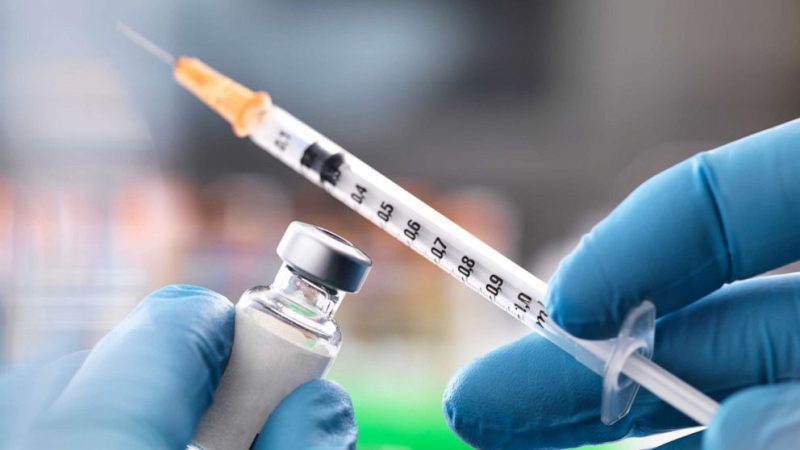
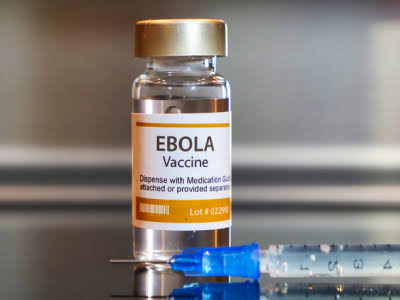
The current outbreak is caused by the rare Bundibugyo virus, for which no approved vaccine or treatment exists. Clinical trials have recently begun using Ervebo, a vaccine proven effective against the more common Zaire strain, while researchers work frantically to develop a vaccine specifically for Bundibugyo.
Since the outbreak was first detected in May in Ituri province, the virus has spread to eight of the DRC’s 26 provinces. Experts believe the virus may have been circulating as early as February in Ituri, an active war zone with armed militias and massive refugee flows. The outbreak is now particularly difficult to contain, partly because the virus was able to circulate undetected for months.
Fears of a regional spread are growing. The virus has already crossed borders, with cases reported in Uganda, Kenya and as far away as Nigeria. With infections recorded in East, Central and West Africa, it has become the most geographically widespread Ebola outbreak in the continent’s history, according to Africa CDC Director-General Jean Kaseya.
A new, highly volatile virus strain colliding with the relentless “forever war” of recurring fighting in eastern DRC is an epidemiological nightmare — and one of the reasons this epidemic became the fastest-spreading Ebola outbreak in history.
On November 6 , a tragedy occurred in the troubled North Kivu province that laid bare how the violence is undermining efforts to contain the epidemic.
About 50km west of the city of Beni, armed men raided the village of Cantine in the dark of night, killing dozens of residents with guns and machetes. According to authorities and civil society groups, at least 33 people were murdered and more than 50 houses set on fire.
The attackers also started a fire near a health post during their overnight assault, forcing around 180 patients to flee the hospital in terror. Among them were numerous suspected Ebola cases and at least one confirmed case.
Gunfire and arson forced a concentrated cluster of high-risk, unmonitored individuals to scatter out into the open and vanish. It shows how the security context in DRC can disrupt tracking and further fuel transmission.
Local authorities have blamed the attack on the ISIL (ISIS)-affiliated group the Allied Democratic Forces, or ADF, rather than M23, a Rwanda-backed rebel group fighting the government. Since the M23 drove the Congolese army out of cities such as Goma and Bukavu in early 2025, the ongoing war in eastern Congo has again made international headlines.
While this latest offensive has intensified the fighting and displaced millions of people, M23 is just one of roughly 100 armed groups operating across the eastern provinces of the DRC. Many of the militias are entangled in overlapping conflicts that have plagued the region since the 1994 Rwandan genocide.
The eastern provinces of Ituri and North and South Kivu are scarred by armed conflict fuelled by ethnic tensions, struggles for political power and competition over resources. The provinces’ vast mineral wealth attracts armed groups and feeds international supply chains involving Western and Chinese companies. Investigations have linked parts of the trade to conflict financing and serious human rights abuses. In this powder keg, the Congolese state itself is a belligerent actor. UN investigators have linked the Congolese army and allied militias to numerous atrocities.
This seemingly endless war is entering its fourth decade, keeping millions of civilians trapped in anarchy. Since 1996, the conflict in the eastern part of the DRC has claimed an estimated six million lives, either by bullets or indirect effects, making it one of the deadliest conflicts in modern history. More than five million people are currently displaced across these three provinces. In rural areas, what little remained of the state has all but collapsed.
For people living amid this violence, Ebola is another threat.
“The people here live in poverty and insecurity; every day is a struggle to survive,” said Congolese physician Alex Bonane Murutsi, who works at the Ebola treatment centre in Bunia where Vandamme did her field assignment. Murutsi started working in the MSF Ebola response after contracting the deadly Bundibugyo virus and fighting for his life for 18 days earlier this year.
“The epidemic makes their already difficult life even harder. For many, it’s hard to accept the prevention measures,” he said.
He has seen families resist safe burials and Ebola survivors face exclusion and stigma. Funerals traditionally involve a lot of touching, dancing around and washing the body of the deceased — rituals that are important to the local culture. Safe burials require isolating the body in a sealed bag to prevent viral transmission. Distrust in Ebola response workers and the inability to perform the traditional rites and say a proper farewell cause some families to hide deaths or resist safe burials.
As for survivors’ stigma, local populations do not always understand that recovered patients are no longer infectious, leading to fear and avoidance due to a lack of public information or misinformation. Even health workers can get a hard time from their own families, Murutsi explained, because they don’t always understand how they can safely work in a treatment centre.
“In the beginning, there was not enough communication. People didn’t always understand why certain measures were necessary,” he explained.
That mistrust sometimes turns violent. One of the soft-spoken doctor’s colleagues was working at a rural health post when a patient suffering from severe bleeding was brought in. The medical staff voiced their suspicion of Ebola, which infuriated the patient’s companions. They insisted the disease did not exist in their village and accused the health workers of bringing it there. The doctor was assaulted and had to flee.
But Dr Murutsi stresses that medical teams do not face hostility everywhere. In Bunia, there is more trust, partly because local health workers engage directly with the community.
“People know us and we take the time to explain why certain measures are important. You don’t earn people’s trust by simply telling them what to do; you have to talk to them,” he explained.
Anna Halford is acutely aware of the challenges of fighting Ebola in conditions of insecurity. The British aid worker coordinates MSF’s response to the outbreak across the DRC.
“The physical access to some of the affected areas is severely compromised,” she said. “This makes it extremely difficult to transport supplies and establish proper screening and surveillance.”
In some conflict-affected areas, violence and insecurity prevent health teams from reaching communities, leaving sick people with little or no access to Ebola testing and care. This also hampers contact tracing, which is crucial for fighting the virus. For every confirmed case, teams must quickly identify people who may have been exposed and monitor them for three weeks after their last known contact.
Halford, an experienced humanitarian who also helped tackle the largest-ever West African Ebola outbreak, emphasised that violence is not the only obstacle to taming the virus.
“Several areas not affected by armed groups are also seeing a rise in cases and struggling with the response,” she pointed out.
Supply routes are not only cut off by the risk of attacks, but also by the country’s weak infrastructure. Patients often have to travel for hours along bumpy roads to reach a treatment centre. Meanwhile, medicines and medical supplies often fail to reach remote villages in good condition.
This leaves front line health workers across the whole DRC without the basic protective equipment needed to safely treat suspected Ebola patients. Halford recently encountered this in a remote clinic far from the conflict-ridden East.
“In an area where, thankfully, numbers are still low, medical workers were forced to make do with makeshift protective gear designed for COVID-19 and flip-flops,” she said, expressing her frustration.
Responding to Ebola is an inherently complex and costly operation. According to the veteran field worker, the security risks act as a disease multiplier, further exacerbated by the crippling lack of funding that Congolese health services historically struggled with.
This longstanding problem has only grown worse in recent years, since international donations have sharply declined. Last year, the United Nations’ humanitarian emergency response plan for the Congo was funded by barely a quarter of the required amount.
Jeremy Konyndyk, who led the US response to the Ebola outbreak in West Africa in 2014 and now heads Refugees International, argued on the Zeteo media website that the dismantling of USAID played a role in the delayed detection. The US Agency for International Development (USAID) previously deployed rapid response teams, known as DART, to detect and contain outbreaks.
With them gone, the early warning system failed, allowing the virus to circulate undetected from February through May. According to him, the cuts also contributed to shortages of protective equipment and limited the capacity to analyse samples and conduct tests.
The collapse of USAID hit even harder because other donors — such as the United Kingdom, Germany, France, and Canada — cut back on aid almost simultaneously, according to epidemiologist Alain Casseus, head of the infectious diseases division of the leading medical charity Partners in Health.
As a result, the Congolese Ministry of Health and Africa CDC were initially left largely on their own to tackle the raging epidemic with limited staff and supplies.
The fragile Congolese healthcare system was quickly overwhelmed.
Early Ebola symptoms resemble those of malaria or typhoid, and infections were often misidentified in understaffed and poorly equipped health centres. After the outbreak was officially declared in May, it took months to bring the testing capacity up to the required level.
Halford is relieved that the international community has recently stepped up efforts to close the funding gap. In September, new pledges from G20 foreign ministers and major donors brought total global commitments since May to around $2.9bn.
“I’m delighted that there have been some donors, and the Congolese state itself, which have pledged and disbursed resources,” she said. “But for whatever reason, we are not seeing enough of the effect of those resources on the ground.”
That mismatch is apparently so striking that Javid Abdelmoneim, the international president of MSF, sounded the alarm earlier this month. In a scathing statement, he warned that the funds simply have not reached the front lines of the fight against Ebola.
“Despite the vast amounts of money provided for the response, many front-line responders are left trying to contain the outbreak with empty hands and empty pockets,” Abdelmomein said in an MSF statement.
“Our teams are often left speechless by the dysfunctions they witness. Six months into the response, this situation is simply unacceptable.”
Abdelmomein cites cases of untrained and unpaid health workers, ambulances unable to respond due to lack of fuel and phantom surveillance teams that exist on spreadsheets but are nowhere to be seen in the field.
Despite funding earmarked for this crucial work, a comprehensive system to detect infections and trace contacts is still lacking, Abdelmomein said.
“In Ituri, only nine percent of patients with Ebola disease treated by our teams had previously been identified as contacts by the surveillance system,” Abdelmomein added.
Halford, his coworker, claims there’s a serious lack of oversight of how pledged funds reach operations on the ground. But according to her, there’s no single explanation or culprit to point fingers at.
“This is not a criticism directed at the DRC government, which itself denounced that lack of transparency. Poor planning and oversight lead to many overlapping aid projects in one area, while others are left neglected,” she said.
Halford notes that the specific circumstances in DRC, where one of the deadliest viruses in the world strikes in a war-torn region with a historically weak health system, make an already difficult Ebola response extremely hard.
- storm
- congo
- ebola
- outbreak
- health
- patient
- worker
- cost