Nocturne review – Stephen Graham is TV’s most evil serial killer … and it’s impossible to stop watching him
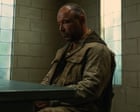
From Hannibal’s hitherto unfailing hands it has been thrown to Stephen Graham, who plays multiple murderer Jurek Walter in the new 10-part psychological thriller Nocturne. Walter, who draws out the deaths of his victims in order to torture their families as much as the individuals themselves, is incarcerated for life in the bowels of Riverside psychiatric hospital in Pittsburgh, Pennsylvania.
The star plays a sadistic murderer still pulling the strings from behind bars. With his high-pitched giggles and fatal whispers, it is a perfectly terrifying show for Halloween
It has taken a while, but I think the torch may finally have passed from Anthony Hopkins as the screen’s most profoundly unsettling and instantly-absorbed-by-the-cultural-imagination serial killer. From Hannibal’s hitherto unfailing hands it has been thrown to Stephen Graham, who plays multiple murderer Jurek Walter in the new 10-part psychological thriller Nocturne.
Walter, who draws out the deaths of his victims in order to torture their families as much as the individuals themselves, is incarcerated for life in the bowels of Riverside psychiatric hospital in Pittsburgh, Pennsylvania. He passes the time by doing push-ups, stashing contraband behind his toilet bowl for as-yet-unspecified purposes, and driving fellow inmates to suicide by whispering to them through the pipes. Graham – muscle-bound, preternaturally still and occasionally emitting a high-pitched giggle – is mesmerising and utterly terrifying.
He soon has his hooks into his new nurse, Karl (Rory Culkin), who is too young, inexperienced and tender-hearted to heed the staff’s warnings about the manipulative monster in the basement. Walter has a way, as one former nurse notes, of making you feel sorry for him – “a man who buried people alive”. Soon Walter has Karl offering up personal information and carrying illicit messages to his supposed lawyer.
In addition to the murders he was convicted for, Walter is also suspected of abducting and killing two children, Michael and Felicia Frost, though their bodies were never found. When Michael (Landon Valentin) stumbles out of the woods after three years, the man who was in charge of the Frost case, Jonah Lynn, comes out of voluntary retirement to work out if and how he was wrong, and where Felicia might be. Lynn (Liev Schreiber) is still grieving for the wife and son he lost in an accident and the partner who killed himself. The question of whether these many sorrows threaten to make him reckless in pursuit of the truth or merely relentless is one of the many uncertainties that will come to infuse the story.
His late partner’s child, Saga (Zazie Beetz), is an FBI agent who has become a surrogate daughter to Lynn. Which is why he is not best pleased when, as the police begin to suspect that Walter has smuggled out a note telling an accomplice to release Michael, she insists that the best way for them to find out more is for her to go undercover as a patient at the facility.
In she goes, parlaying her experience with a long-institutionalised mother into something useful – palming pills, fighting off assaults from other staff members and behaving badly enough to get herself sent down to the basement and become Walter’s neighbour. Can you pretend to be criminally insane without jeopardising your own sanity? Can you instigate a relationship with someone who lives to unearth weaknesses in others and exploit them without getting suckered in? Can you exist within a dehumanising system and keep your sense of self, let alone a professional self, intact? More uncertainties and ambiguities gather.
Nocturne is adapted, by Rowan Joffé, from two volumes of the Joona Linna series by Lars Kepler (the nom de plume of husband-and-wife team Alexander Ahndoril and Alexandra Coelho Ahndoril). As with most Scandi noir, their books are slow burns, and so too is Nocturne, though the series’ focus is narrower – there is less space given to the impact of Walter’s crimes on the community and more to his present influence on those around him.
This means that certain roles are underdeveloped, despite some beautiful work from the cast (particularly veteran character actors Bill Camp as the harrowed police chief and Chrissy Metz as the children’s mother). They do, however, give glimpses of how the series might have been strengthened by a little more emphasis on the trail of suffering caused rather than just its execution; if perhaps a few twists and revelations had been cleared for emotional delineation and investment instead. There is a slight but growing sense as the series wears on that it is just a bit less impressive than it was shaping up to be, a little more hollow than it thinks.
Then Graham appears again and the adrenaline that floods your system in the presence of his radiant evil pushes all rational thoughts from your mind, and you are captivated once more. It is the perfect watch for Halloween, especially for those of us who are always more horrified by the menace that stalks the earth in all-too-human form than by anything they say the supernatural can throw at us.
- graham
- nocturne
- stephen
- killer
- review
- murderer
- giggle
- walter