‘False autumn’: stressed trees drop leaves early after scorching English summer
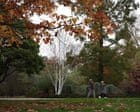
Season will be less vibrant with trees such as birches, which usually offer a striking burst of yellow leaves, already bare Among a canvas of copper, red and purple autumn leaves on display at Wisley garden in Surrey, south-east England, one tree stands conspicuously naked. “The birch has lost all its leaves,” says Guy Barter, the chief horticulturist at the Royal Horticultural Society.
Season will be less vibrant with trees such as birches, which usually offer a striking burst of yellow leaves, already bare
Among a canvas of copper, red and purple autumn leaves on display at Wisley garden in Surrey, south-east England, one tree stands conspicuously naked.
“The birch has lost all its leaves,” says Guy Barter, the chief horticulturist at the Royal Horticultural Society. “That’s the effect of drought, so it’ll have no autumn colour this year.”
Where a burst of sunny yellow foliage would normally brighten the display, the birch can offer only its ivory-white bark. After the hottest summer on record, the tree has dropped its canopy early, stressed from months of high temperatures and choosing to not lose any more water through its leaves.
This is also known as a “false autumn”, where the stress of extreme summer conditions prompts trees and plants to behave as if the season has changed.
The birch illustrates how extreme weather driven by the climate crisis is reshaping the flow of the UK’s seasons. Thousands of plant varieties at Wisley are still displaying vibrant hues, but the drought-sensitive, yellow-leafed trees such as birches, beeches and sycamores had shed their foliage by mid-October.
Normally, autumn’s effect on trees is triggered by shortening daylight, dropping night-time temperatures and adequate ground moisture brought on by rain. But severe summer heat and drought has disrupted this usual cycle by forcing stressed trees into early defoliation and premature colouring, resulting in a display that kicked in earlier than expected.
The majority of England and Wales remains in drought, and six areas of England were declared in severe drought this month with river and reservoir levels running low.
Unlike deep-rooted species such as oaks, trees with shallow root systems are unable to tap into deeper groundwater, making them vulnerable to leaf drop when surface soil dries out during a drought. “Birch, beech and sycamore have been among the trees worst affected,” says Barter. “It’s at least as colourful as it is most years, but some of the trees are not giving their best, so it’s not the perfect autumn colour.”
The RHS expects an earlier autumn colour peak in drought-hit areas, with intense but potentially fleeting displays. Reds, ambers and purples could stand out as some trees normally prized for yellow foliage lose their leaves.
Tim Upson, the director of gardens and horticulture at the RHS, says the colour peak historically comes toward the end of October, but this year’s drought has brought some trees into colour earlier. “Quite often now it’s going into November when you get that crescendo,” he says. “So for me, this is quite unusual.”
As Storm Austen blows in, the Met Office has warned of strong winds that could damage buildings and bring down trees. Experts warned in September that high winds brought by El Niño could decimate already drought-weakened trees.
Although shallow-rooted and yellow-leaved trees are struggling, other species remain vibrant, including the biggest liquidambar tree in the UK with its flutter of pink, red and purple leaves. Barter says gardeners here are likely to plant fewer birches and more “trees of the future” such as liquidambar going forward.
“There are different scenarios under climate change,” he says. “The generally accepted one is that we’ll have milder, wetter winters, but we’ll still have the occasional really cold one. So it’s no good planting tender trees, because when we have a really cold winter, they’ll succumb.
“We’re looking for trees that are completely hardy in cold winters and have also got deep, wide-ranging roots that can tolerate hot, dry summers.”
He lists Lebanon cedars and swamp cypresses as trees that Wisley will plant more of to adapt to changing conditions.
Upson says adaptation is nothing new at Wisley; it was happening when he started working in horticulture 40 years ago. “There are some wonderful Californian oaks and Mediterranean oaks which we planted as an experiment 30 years ago, and they’re thriving now.”
Familiar species will still have a place as temperatures change, he says, but beech and birch could become less spotted, surviving better in sheltered or damper locations.
“I think what will happen is that we won’t necessarily lose plants, but they will either become shorter-lived or they won’t grow in the most exposed and stressful situations,” he says. “It’s going to be very much a changing landscape.”
- autumn
- tree
- english
- summer
- birch
- leave
- season
- burst