Shabana Mahmood pledges to tackle ‘corrosive and growing perception of two-tier policing’ – UK politics live
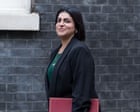
Shabana Mahmood has done two of the most difficult jobs in the government. With Labour under pressure from anti-migrant populists, in Reform UK, in the Conservative party and in the media, as justice secretary and home secretary she has been on the frontline in all the debates where the fight between the right and progressive politics has been most intensive.
Good morning. Shabana Mahmood has done two of the most difficult jobs in the government. With Labour under pressure from anti-migrant populists, in Reform UK, in the Conservative party and in the media, as justice secretary and home secretary she has been on the frontline in all the debates where the fight between the right and progressive politics has been most intensive. And she has developed a bold, novel, and largely successful strategy for winning these battles; she disarms her critics by agreeing with them.
Not entirely, of course. She is still a Labour cabinet minister. But sometimes she can sound a bit like Chris Philp.
And today we are going to get another example. In a speech to the National Police Chiefs’ Council (NPCC), she will tell officers that she wants to do something about so-called two-tier policing – the theory that, under pressure to be politically correct, the police have become biased towards leftwing causes and nervous about enforcing the law against minority ethnic people for fear of being seen as racist.
On the right, the existence of this version of two-tier policing is now an article of faith, even though most of the time actual policing is very different. This is how Robert Hutton from the Critic satirised the idea in a sketch two years ago, during 2024 summer riots when racists were trying to burn down hotels housing asylum seekers.
This is about fairness, Ed, and it’s a very important point. When I talk about two-tier policing, I’m talking about the way that different groups of marchers are treated. For instance, if you go to a Pride march, there are police with rainbow flags on their cars. During the Black Lives Matter protests, the police took the knee. But you go to these protests, and do you see the police waving swastikas? No you don’t. When was the last time you saw a film of a policeman kicking a brown-skinned person in the head? Well, OK, but when was the last time you saw a video of a policeman trying to set fire to a building full of refugees? Exactly. That’s what we mean by two-tier policing.
Here is a Guardian article looking at whether policing really is two-tier. In some respects, it is, the article points out. “Black people remained more likely than any other ethnic group to be subjected to almost every form of force, from handcuffing and dog bites to firearms and Tasers, when compared with population or arrest figures.”
In her speech today, from the extracts released in advance, Mahmood is not going to say that there is two-tier policing. But she will argue that it is important to respond to the “perception” it exists. She will say:
We must tackle head-on the corrosive and growing perception of two-tier policing in this country.
Now let me be clear: I know the vast majority of officers police impartially and that policing without fear or favour is their creed.
But there have been examples of differential treatment and they have harmed policing, allowing people – often motivated actors – to whip up the idea that there is two-tier policing in this country.
In its report previewing the speech, the Press Association says:
Mahmood will lament the low levels of black officers in police forces, while also warning against “misguided attempts at course correction” that lead to “differential treatment”.
And she will warn officers against engaging with “activist groups”, telling them to “leave the politics to the politicians”.
She will also set out plans to fast-track talented recruits – including from outside policing – to senior ranks to address sometimes “inadequate” leadership.
A new “impartiality standard” is being developed to ensure all members of the public are treated equally, she will tell chief constables and police and crime commissioners.
This will bring guidance on key impartiality principles into one place and aims to give police more confidence in how they handle cases, regardless of someone’s race, faith or other characteristics, and to give the public confidence they will be treated fairly.
A third of Britons believe police treat people from ethnic minority backgrounds more favourably than white people, a More in Common poll found earlier this year, noting this marks a doubling in the last two years.
Mahmood will tell the National Police Chiefs’ Council (NPCC) that it is “shameful”, 33 years after the murder of black teenager Stephen Lawrence, that the proportion of black officers remains virtually unchanged.
But Mahmood will argue that some approaches intended to promote equality, such as the former police anti-racism commitment, have risked undermining confidence in impartial policing.
We must also be wary of misguided attempts at course correction, where the pursuit of equality leads instead to differential treatment.
To the public, it was patently absurd to tell police officers that fair policing does not mean treating everyone the same.
This is a reference to the Police Anti-Racism Commitment, a document that has frequently been criticised by the Conservatives and Reform UK. It says producing equality of policing outcomes “does not mean treating everyone ‘the same’”.
9.30am: Chris Bryant, the Northern Ireland secretary, gives evidence to the Commons Northern Ireland committee.
11am: Yvette Cooper, the health secretary, gives a speech at the King’s Fund conference.
Noon: Andy Burnham faces Kemi Badenoch at PMQs.
1pm: Shabana Mahmood, the home secretary, gives a speech on policing.
After 12.30pm: MPs begin a debate on a Tory opposition day motion opposing most of the key features of the PM’s proposed UK-EU reset deal due to be agreed on Friday.
I’m afraid we are no longer able to have comments open below the line every day on this blog. If you want to contact me, please email politics.live@theguardian.com. You can use this email to flag up corrections, comments for publication, questions or complaints.
- policing
- mahmood
- police
- officer
- shabana
- perception
- tier
- politic