What will a pedestrianised Oxford Street mean for transport?
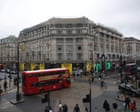
A stretch of Britain’s most famous shopping street is to be vehicle-free as part of £150m government-backed scheme Much of Britain’s most famous shopping street will be closed to traffic from Monday as the long-awaited pedestrianisation of London’s Oxford Street begins. About half of the 1.2 mile street will initially be vehicle-free, after decades of planning and dispute over how to best use the street, an important transport thoroughfare and the home for flagship stores for big shopping chains.
A stretch of London’s Oxford Street is to be vehicle-free as part of £150m government-backed scheme
Much of Britain’s most famous shopping street will be closed to traffic from Monday as the long-awaited pedestrianisation of London’s Oxford Street begins.
About half of the 1.2 mile street will initially be vehicle-free, after decades of planning and dispute over how to best use the street, an important transport thoroughfare and the home for flagship stores for big shopping chains.
Private cars have been barred for years but now all motorised traffic, including buses and black cabs, as well as bicycles, will be kept away.
For the London mayor, Sadiq Khan, who has targeted the switch as part of clean air plans throughout his tenure, it is a political victory, aided by the backing of central government to override local council objections.
While towns and cities around the UK have long pedestrianised their centres, the location, scale and notoriety of Oxford Street, attracting millions of foreign visitors each year, will make the £150m scheme’s outcome of interest to city planners around the world.
London has studied the pedestrianisation of central Sydney, and discussed the scheme with Barcelona, whose La Rambla is similarly viewed as shabbier than its renown deserves.
The big retailers, Transport for London and those who just want a pleasanter, green city centre will be hoping the changes live up to their promise. Here we unpack what is changing:
From 7am on 26 October, a stretch of nearly 0.6 miles (almost 1km) of Oxford Street, containing the most famous department stores including John Lewis and Selfridges, will be vehicle-free.
The junction with Orchard Street, near Marble Arch, to Great Portland Street, east of Oxford Circus Ikea, will be closed to all traffic between 7am and midnight on every day of the week.
Businesses will be able to make deliveries outside those hours via certain access routes, but vehicles will not be able to travel the length of Oxford Street.
Private vehicles, such as cars, are already forbidden to drive on the street between 7am and 7pm and this ban will now extended to 24 hours a day seven days a week and cover buses, black cabs and bikes too.
Vehicles will still be able to cross the pedestrianised stretch of street at several points including the major junction of Regent Street and Oxford Circus, and others including New Bond Street.
Bus routes including the numbers 7, 98 and 390 will now run along Wigmore Street, which runs parallel to Oxford Street.
There will be taxi ranks within 100m of the traffic-free area on Oxford Street and surrounding roads.
In contrast to some other traffic-free areas of London, cycles, e-bikes and e-scooters will not be allowed on the pedestrianised strip at any time.
Mobility scooters will still be allowed. Access for disabled people may prove easier than many other parts of London, with Bond Street and Tottenham Court Road stations, on the Underground and Elizabeth line, both step-free.
Emergency services will be able to access the entire area whenever required via the cross streets. Cargo e-bikes will be introduced to collect litter and enable street cleaning during pedestrianised hours.
Khan has talked about making Oxford Street a public plaza with outdoor dining, and improved street furniture and lighting is coming.
Early next year, more trees and seating are due to be installed, while the road surface will be raised level with the pavements in places to create public squares and event spaces.
The pedestrianisation of this stretch of the landmark shopping street has repeatedly been described as the “first phase”, although plans for the rest of the thoroughfare are likely to depend on the success – or otherwise – of the scheme.
- street
- oxford
- transport
- shopping
- mean
- britain
- vehicle
- stretch